Search:studio 45 pres joe

Styles
All
  • 1
VARIOUS - 12 INCH LOVERS 7 (2x12")

Since 2020, 12 Inch Lovers has embarked on an exhilarating journey, characterized by sold-out parties and samplers that have built a loyal fanbase. These samplers consistently find their way to collectors in search of contemporary classics. Samplers 7 & 8 once again constitute a collection of true classics, rare gems, and club tracks that have never before appeared on vinyl.

Sampler 7

In Stock

On Stock and ready to ship

26,26
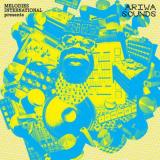
Mad Professor,  Various - Melodies International presents Ariwa Sounds (2x12")
  • 1: Johnny Clarke - Come Back To Me
  • 2: Sgt. Pepper - Wake Up
  • 3: Mad Professor & Joe Ariwa Feat. Horace Andy - Non Violence Dub
  • 4: U Roy - Old School Music
  • 5: Davina Stone - Silly Wasn't I
  • 6: Kofi - Didn't I
  • 7: Sandra Cross - Can't Let Dub Go
  • 8: Mad Professor Feat. Mafia & Fluxy - 6 Million Dub
  • 9: Ariwa Posse Feat. Abel Miller - Everytime I See My Baby
  • 10: Kofi - Losing Time For Love
  • 11: Aisha - Can You Feel It (1990)
  • 12: Sandra Cross - I Lived For You
  • 13: Sister Nancy - Live The Life You Love
  • 14: Queen Omega - Rocking And Popping
  • 15: Ranking Ann - Liberated Woman
  • 16: Bonus Digital Track: Everytime I See My Baby (Mad Professor Osaka Live Dub)

In 1979, Neil Fraser (artistically known as Mad Professor) founded Ariwa Sounds, the longest-serving and one of the most influential independently owned Reggae studios and record labels in the UK. From humble beginnings set up in the front room of Neil's home in South London recording on 4-track and homemade equipment, Ariwa would go on to record and release over 300 albums including works from some of the most impactful and storied artists of their time in the genres of Reggae, Dub, and Lovers Rock

Whilst our previous release in collaboration with Ariwa captured the label's early sound, a shared performance with Neil in Osaka and regular visits to his South London studio inspired us to assemble this 15-track compilation, showcasing the label's output across 45 years. Our release emphasizes some of the label's greatest vocalists: Johnny Clarke, Sandra Cross, Kofi, U Roy, Sister Nancy, Queen Omega, Aisha, Garnett Cross, Abel Miller, Horace Andy and more — presenting the Motown and Stax influences in the Lovers Rock, but also provides a glimpse into the dubbier and more experimental side of the label, showcasing Ariwa's commitment to quality but also their personality, philosophy and their humour. Love songs, break-up songs, socially engaged songs, dub experimentations — this compilation is not a "best of" Ariwa but a diverse and honest celebration of the label through the lens of Melodies International.

The compilation will be out in July in vinyl 2xLP, CD, digital formats, mastered from the original tapes by Frank Merritt (the Carvery), pressed at Optimal, artwork created by Jason Evans with design and assembly contributions from Nevil Bernard and Will Sweeney, animated teaser by Nevil Bernard and Melozine designed by Mafalda Meireles.

pre-order now19.06.2026

expected to be published on 19.06.2026

34,41
Stevie Nicks - Rock a Little (2x12")
  • A1: I Can't Wait
  • A2: Rock A Little (Go Ahead Lily)
  • A3: Sister Honey
  • B1: I Sing For Things
  • B2: Imperial Hotel
  • B3: Some Become Strangers
  • C1: Talk To Me
  • C2: The Nightmare
  • D1: If I Were You
  • D2: No Spoken Word
  • D3: Has Anyone Ever Writen Anything For You

Looking back on her career in the early 90s, Stevie Nicks described the first track of Rock a Little as “the most exciting song that I had ever heard.” This coming from a superstar who was already closely affiliated with several bajillion-selling Fleetwood Mac albums — to say nothing of her own benchmark solo debut. Her remarks attest to the enthusiasm and effort she invested in her third record, a 1985 work that quickly furthered Nicks’ profile and cemented itself as a piece of 80s pop lore.

Mastered at MoFi’s California studio, pressed at Fidelity Record Pressing in California, strictly limited to 4,000 numbered copies, and housed in a Stoughton gatefold jacket, Mobile Fidelity’s 180g 45RPM 2LP set presents Rock a Little in audiophile sound for its 40th anniversary. Helmed by a cadre of producers and engineers, and recorded for a reported one million dollars, the platinum-certified album teems with a head-spinning array of colors, tones, dreamscapes, and accents. This reference-grade reissue marks the first time they are all brought to light and conveyed with proper balance, dimensionality, and positioning.

Though Rock a Little doubtlessly has period characteristics of a mid-80s LP, Nicks and company spare no expense when it comes to distinguishing the music with expansive sonics distinguished with lush melodies, high-tech percussion, echoing vocals, sampled keyboards, and layers of sophisticated accents. The degrees of spaciousness, headroom, and dynamics are nothing less than inspiring, while the newly enhanced detail, texture, and clarity make the songs sing like never before. As for Nicks’ voice? Wait ’til you experience the transparency and depth.

Those advantages extend, of course, to the aforementioned “I Can’t Wait,” a statement-making opener shot through with modulating synthesizers, splashy drums, metallic guitars, and serious drama. Holed up in a massive studio, Nicks required just one take to nail her part, which she called “magic and simply not able to beat.” The singer-songwriter also distilled the reverberating emotional essence of the Top 20 tune, stating “when I hear it on the radio, this incredible feeling comes over me, like something really incredible is about to happen.”

The same can be said for nearly all of Rock a Little. Crafted by the likes of Songwriters Hall of Fame multi-instrumentalist/producer Rick Nowels, Heartbreakers organist Benmont Tench, bassist Bob Glaub, jack-of-all-trades Greg Phillinganes, and session-pro guitarists Waddy Watchel, Les Dudek, and Danny Kortchmar — along with another two dozen or so participants — the record spills with diverse ideas, shapes, and moods. Everything is in the right place, as evidenced by the swirling glide and sensual undertow of the slightly funky title track to the snapping rhythmic pace and big hooks of “Imperial Hotel,” one of Nicks’ standout moments.

“What was it she wanted?” Nicks queries on “No Spoken Word,” continuing a theme of contemplation that runs through the narratives. Nicks never lands on a definite answer, but hearing her explore loneliness, love, and the secrets we keep to ourselves proves continuously rewarding. Take her passionate performance on a cover of Chas Sanford’s “Talk to Me,” a Top 5 smash furthered by tasteful saxophone lines and understated folk elements. Immersive yourself in the grand sonic corridors of “If I Were You,” laden with Nicks’ signature mysticism.

Moreover, surrender to the gravitas of the closing “Has Anyone Ever Written Anything for You,” a piano ballad composed about the death of Joe Walsh’s three-year-old daughter. As Nicks asserts earlier on the album, she sings for things money can’t buy.

So, rock a little, yes, but dare to feel even more.

pre-order now

This item has not yet been released. You can pre-order the product now.

82,56
Various - Soul Jazz Records Presents Studio One Showcase 45 Expanded Edition

Soul Jazz Records" Studio One Showcase 45 features a roll call of classic Studio One reggae legends including Horace Andy, Cornell Campbell, Bob Marley and The Wailers, Jackie Mittoo, The Heptones, The Skatalites and more - seminal reggae artists who all launched their careers at the legendary Studio One label. The album was previously only ever released as a long-deleted limited-edition seven-inch box set for Record Store Day. This album has now been expanded into a super double-vinyl album edition as well as first time on CD, with both featuring a massive eight bonus tracks of wicked Studio One classics and rarities.

In Stock

On Stock and ready to ship

28,78
EL CLAN ANTILLANO - EL CLAN ANTILLANO LP

Debut album of heavy Colombian salsa by the obscure and short-lived El Clan Antillano. Founded in 1975 by singer Jacky Carazo and radio personality / composer Mike Char and backed by a studio orchestra comprised mostly of Fruko Y Sus Tesos band members. The record has been remastered from the original tapes, with an additional three bonus cuts taken from two rare 45 singles, including the sought after track ‘Alma’. First time reissue. 180g Vinyl.

El Clan Antillano was an obscure, short-lived salsa group started in 1975 by singer Jacky “El Caballo” Carazo, originally from Cartagena, and radio host / song composer Mike Char, from Barranquilla. The band was active only until 1977, with a mere two albums to its name. Carazo and Char, “los amigos costeños” (friends from the Caribbean coastal area) created El Clan Antillano as a fresh start after the previous group Carazo had been the lead singer for, El
Afrocombo, had become inactive.

Char primary passion was music, especially songwriting. One of his skills in this area was adapting foreign songs, often in a different language, rhythm, arrangement or genre, and refashioning the tune in an uptempo Caribbean dance mode as a salsa or cumbia. This formula, as well as his own original compositions, soon brought him success not only with costeño friends like Carazo and Vicentini, but also with Medellín’s Fruko, allowing him to make a name for himself with record labels in that city. It was at this juncture, in 1975, that El Clan Antillano was born. This is their first album and was recorded with local studio musicians. It’s been said that most on the first album were from Fruko Y Sus Tesos (the voice of Joe Arroyo can be heard on coro) as well as others involved with various groups like La Protesta (de Colombia) and Juan Piña’s La Revelación.

The album kicks off with ‘Donde ‘sta? Donde ‘sta?’, a medley of costeño lyrical phrases quoting various popular porros. Gradually changing the vibe, this is followed by Enrique Aguilar’s ‘El baile del
ratón’, a humorous cumbia that changes into a salsa halfway through. As if El Clan Antillano were not entirely confident about featuring purely salsa from the start, the same cumbia/salsa hybrid formula is used in the third piece, a faithfully rendered version of Eddie Palmieri’s ‘Mi cumbia’.

‘Estás equivocada’ rocks hard like the best Venezuelan salsa of the time. ‘Esta mañana’ is a cover version of an obscure bolero from Curaçao’s Erwin Castaneer with Super Combo Castaneer. ‘En la oscuridad’ is an interesting mashup of Puerto Rican bomba and New York style pachanga. ‘El despertar’ is a sunny sounding pop song reinvented as a Nelson y sus Estrellas style salsa/cumbia hybrid with a fantastic ‘montuno’ section.

Up next is a hard salsa jam in the ‘pregón’ (street vendor’s cry) genre, written by Fruko Y Sus Tesos percussionist Álvaro Velásquez (composer of ‘El preso’). The original album track list closes out with a fantastic rendition of Puerto Rican singer/composer Bobby Capó’s classic ‘El negro bembón’ that the world first leaned to love through Cortijo y Su Combo. Three bonus tracks have been added to the album as it was originally very short. Interestingly, there were four songs from two 45 singles cut by the band that were never included on either long play. While the ephemeral El Clan Antillano may not be as well known as the groups it’s related to, namely El Afrocombo and Fruko Y Sus Tesos, it certainly deserves credit as a worthy participant in the historical evolution of salsa colombiana.

In Stock

On Stock and ready to ship

24,79
Various - Tchic Tchic: French Bossa Nova 1963-1974  Colored Edition LP 2x12"
  • A1: Les Masques - Il Faut Tenir (1969)
  • A2: Isabelle Aubret - Casa Forte (1971)
  • A3: Christianne Legrand - Hlm Et Ciné Roman (1972)
  • A4: Jean Constantin - Pas Tant D'chichi Ponpon (1972)
  • A5: Billy Nencioli & Baden Powell - Si Rien Ne Va (1969)
  • B1-: Marpessa Dawn - Le Petit Cuica (1963)
  • B2: Jean-Pierre Sabar - Vai Vai (1974)
  • B3: Sophia Loren - De Jour En Jour (1963)
  • B4: Isabelle - Jusqu’à La Tombée Du Jour (1969)
  • B5: Sylvia Fels - Corto Maltesse (1974)
  • C1: Frank Gérard - Comme Une Samba (1972)
  • C2: Ann Sorel - La Poupée Des Favellas (1971)
  • C3: Charles Level - Un Enfant Café Au Lait (1971)
  • C4: Andrea Parisy - Les Mains Qui Font Du Bien (1970)
  • C5: Audrey Arno - Quand Jean-Paul Rentrera (1969)
  • C6: Aldo Frank - T’as Vu Ce Printemps (1970)
  • D1: Christianne Legrand - Cent Mille Poissons Dans Ton Filet (1972)
  • D2: Clarinha - Lemenja (1970)
  • D3: Hit Parade Des Enfants - Aquarela (1976)
  • D4: Jean-Pierre Lang - Tendresse (1965)
  • D5: Magalie Noël - Une Énorme Samba (1970)
  • D6: Françoise Legrand - La Lune

Ever since the late 1950s bossa-nova revolution, Brazil’s influence on French music has been undeniable. Pierre Barouh, Georges Moustaki and a vast array of lesser known artists, all made the Musica Popular Brasileira (MPB) an axis of promotion at the service of a cool and metaphysical, modern and mixed Brazilian lifestyle. Some were seduced by the poetic languors of the bossa, some were looking for fun, and others just loved the American hybridization of jazz-bossa, jazz-samba.


What is bossa nova? One of its creators, Joao Gilberto said: "Its style, cadence, everything is samba. At the very start, we didn't call it bossa nova, we sang a little samba made up of a single note - Samba de uma nota so .... The discussion around the origins of bossa nova is therefore useless”. It is nevertheless useful to remember that these magnificent Brazilian songs, which the guitarist describes as samba, were shifted and balanced around improbable chords. "I like things that lean, the in-betweens that limp with grace," said Pierre Barrouh, quoting Jean Cocteau.


With emotion, arrangements for violin and supple guitar licks, bossa nova rapidly changed. A transformation that can be heard in the Tchic, tchic, French Bossa Nova 1963-1974 compilation, the result of a cultural reappropriation, which traveled through the United States and supplemented itself in France.

A musical revolution that has remained significant, bossa nova was born in Rio. From 1956 to 1961, Brazil lived through its golden years. In five years, the country had invented its modernist style. Elected president in 1956, Juscelino Kubitschek de Oliveira, an elegant man with a broad forehead, brandished a promising slogan: "Fifty years of progress in five years". He quickly got to work. Not worried about increasing debt, he launched the project for a new federal capital, Brasilia, designed by the communist architect Oscar Niemeyer. Volkswagen opened state-of-the-art factories and created the “fusquinha”, the Beetle. In Rio, the Vespa made its first appearance. The Arpoador Surf Club crew run into the “girl” from Ipanema, Helô Pinheiro - the tanned garota ("chick"), between a flower and mermaid, who at 17 walked by the Veloso bar, where the fiery author and composer, Tom Jobim and Vinicius de Moraes, were getting drunk on whiskey. From then on, bossa symbolized cool.

In 1958, Joao Gilberto recorded Chega de Saudade, which the directors of Philips denied, calling it "music for fagots". The marketing director, who believed in it, secretly pressed 3000 78-inch vinyls and distributed them at schools around Rio, creating a tidal wave.

American jazzmen then took over. In particular, trumpeter Dizzy Gillespie and guitarist Charlie Byrd. In November 1962, the Brazilian Ministry of Foreign Affairs funded a "Bossa-Nova" concert at Carnegie Hall in New York, inviting the genre’s pioneers. Unprepared, the show soon turned to disaster. But the troupe was invited to the White House by Jackie Kennedy. The first lady loved "the new beat" and in particular Maria Ninguem, a song by Carlos Lyra, later covered by Brigitte Bardot.

In Brazil, the 1964 military coup quickly ended this euphoria. The destructive atmosphere that ensued pushed many Brazilian musicians to leave, if not to exile. Thus, Tom Jobim, Sergio Mendes and Joao Gilberto arrived to the United States. In New York, Joao Gilberto met saxophonist Stan Getz. At the time, he was married to the Bahianese Astrud Weinert Gilberto, who had a German father. She had never sung before, but she knew how to speak English. Getz therefore asked her to replace her husband on The Girl From Ipanema. The Getz/Gilberto record with Tom Jobim on piano, was released in March 1964. Phil Ramone, the "pope of pop" was in charge of sound.

Bossa nova arrived in Paris through the classic “guitar-voice” channel (Pierre Barouh, Baden Powell, Moustaki…) But France loved jazz and Paris had already welcomed its American contributors. All these good people were to pass through Saint-Germain-des-Prés. The cabaret l'Escale became the Mecca of Latin American sound where one could find Pierre Barrouh and his friends, such as the Camara Trio, samba-jazz aces, whose only record was published by the Saravah label. With a band strangely called Les Masques (a band that included Nicole Croisille and Pierre Vassiliu, among others), the Camara Trio recorded an interesting Brazilian Sound, including the track Il faut tenir which is present on this tasty compilation of rarities.

Other enlightened musicians can also be found on the compilation, such as Jean-Pierre Sabar (songwriter for Hardy, Auffray, Leforestier ...) and the French pop rock organist Balthazar. In 1975, Sabar recorded Aurinkoinen Musiikkimatka on a Finnish label, which featured the crazy Vai, Vai, included on this record. We are now following the footsteps of Brazilian electronic musicians such as Sergio Mendes, Eumir Deodato or Marcos Valle who created funk and disco sounds on their keyboards and synthesizers. A style that influenced Véronique Sanson when she wrote Jusqu’à la Tombée de la nuit in 1969 for Isabelle de Funès, the niece of Louis and a great friend of Michel Berger - Sanson did end up singing this track on her 1992 Sans Regret record.


The pinnacle of exoticism and travel, Sylvia Fels’ Corto Maltese includes bongos, sea mist and ocean sounds. The title was taken from Jacky Chalard’s concept album written in 1974, Je suis vivant, mais j’ai peur (I am alive, but I am scared), based on Gilbert Deflez’s science fiction novel.


However, bossa nova extended the scope of popularity. "In the 1970s, I was a fan of Sergio Mendes, Getz / Gilberto. I fell in love with this music that I knew because I had been an orchestral singer, " explained Isabelle Aubret, who in 1971 delivered a composite record of covers by the very funky Jorge Ben, Orfeu Negro, Tom Jobim, Vinicius de Morais and Jean Ferrat. "I recorded this album for Meys Records in Paris, far from Brazil, with wonderful musicians, François Raubert, Roland Vincent, Alain Goraguer...". The latter wrote the arrangements for Casa Forte, a very percussive title borrowed from Edu Lobo, one of the initiators of the bossa who spent time in California. "Jazz and bossa came together and produced very rhythmic music. I love singing, it allows me to dream, to have fun, to feel a high on stage, and these songs brought me joy, made me swing, my singing felt like a dance.”


The world tours of French singers and their desire for the tropics, often brought them to Rio with its hills, forests, caipirinhas and tanned bodies. There are surprises though, like this Iemenja (Iemenja is the goddess of the sea in the Afro-Brazilian candomblé religion). Not unlike the composer and musician Jean-Pierre Lang, based in Sao Paulo, Claire Chevalier taught Brazil to Brazil. In 1970, the singer and painter published a 45-inch vinyl, Mon mari et mes amants (My husband and my lovers), under the improbable pseudonym of Clarinha (little Claire). She was then living in Rio, with her husband, Joël Leibovitz, who founded a band called Azimuth, and who owned a record label specialized in "sambas enredos" songs for samba school parades.


For its B side, she asked Pierre Perret to come up with lyrics for a song composed by Carlos Imperial: "Oh goddess of the sea, o goddess Iemenja, I bring a white rose to adorn your long hair ..." . "Perret came to see us, and we had fun, remembers Joël Leibovitz. We wrote Lemenja for fun, we recorded it at the Havaí studio, behind the Central do Brasil the central station. Erlon Chaves, the arranger who worked with Elis Regina, joined us" adding his share of Afro-Brazilian percussions and funky brass to the mix.

There is a common misunderstanding in Franco-Brazilian history: that bossa, admittedly hedonistic, is perceived as funny, even though the poets who wrote the texts are often philosophizing on the human condition. Its French interpreters pull it towards a carnival inspired universe, far removed from its fundamental essence. Thus, Jean Constantin covered the famous Samba da minha terra, an ode to the art of samba written by the classic Bahian composer Dorival Caymmi, renaming it with the enticing title of Pas tant de tchi tchi pompon: "On your pier there is no tchi tchi / when you arch your back, you know everything is alright ”(lyrics by Gérard Calvi). This expedited bossa aims for the absurd, but retains a certain elegance.

Indeed, Jean Constantin was not an idiot, the rather large man had a huge mustache and liked fantasy, (Les pantoufles à papa, Le pacha, inspired by cha-cha-cha-cha, salsa and jazz) but he was also the lyricist of Mon manège à moi interpreted by Edith Piaf, the composer of Mon Truc en plume by Zizi Jeanmaire and the soundtrack of François Truffaut’s 400 Blows. Le Poulpe, published in 1970, from which this bossa is extract, was arranged by Jean-Claude Vannier, an accomplice of Serge Gainsbourg’s Melody Nelson. In short: "There is enough of samba / By looking at the parasol / Because my poor cabeza / Is going to die in the sun".

Even the American actress Marpessa Down, who was at the heart of the bossa nova revolution with her role as Euridyce in Marcel Camus’ film Orfeu Negro, winner of the 1959 Cannes Palme d'or, fed the clichée with Je voudrais parler au petit cuica - "Tell me how you manage to always make people want to dance / It's true, I must admit that I cannot resist your magic" - in consequence, once can hear the cuica, a little drum inherited from the Bantu.


But bossa nova had many angles. Societal, of course, pushing actresses who were symbols of women's liberation like Brigitte Bardot, Jeanne Moreau, or Sophia Loren to engage in the exercise of accelerated bossa. In February of 1963, Sophia Loren made a record in French in Rome, Je ne t'aime plus, featuring the song De jour en jour, a bossa written by two Italians, Armando Trovajoli and Tino Fornai, which was released a little later by Barclay. Bossa accompanied the 1960s, a decade of moral liberation. Ann Sorel, who interpreted La Poupée des favellas, caused a sensation with L’amour à plusieurs, a provocative song written by Frédéric Bottom and Jean-Claude Vannier. As for the actress Andrea Parisy, she displayed her bourgeois cheekiness in Marcel Carné's Les Tricheurs before interpreting Les mains qui font du bien. And Magalie Noël, the friend of Boris Vian, who sung Johnny fais-moi mal, was hired to sing Une énorme Samba, composed by Alain Goraguer (arranger to Gainsbourg, Bobby Lapointe and Jean Ferrat) with lyrics by Frédéric Botton.

But in the end, of what wood is bossa nova made of? The answer is given by Christianne Legrand, daughter of Raymond the conductor, and sister to Michel the composer: "With me, with jà" - jà means "immediately" in Portuguese. In 1972, the singer, an expert in vocal jazz and a member of the Double Six, published Le Brésil de Christianne Legrand. Two songs included on the Tchic Tchic compilation that demonstrate how bossa, jazz, funk, rock, etc. work like a swiss army knife: the music is used to denounce broken systems, or miracles, HLM et ciné roman, Cent mille poissons dans ton filet, two songs from the O Cafona soundtrack, a successful telenovela broadcast, at the time in black and white, on TV Globo. The first was adapted in French by the fighter and friend of the Legrand tribe, Agnès Varda. The second is content with a play on words, jostling them into a summer fun.


Véronique Mortaigne

pre-order now17.04.2026

expected to be published on 17.04.2026

27,31
Guilty Razors - Complete Recordings 1977 - 1978

UILTY RAZORS, BONA FIDE PUNKS.


Writings on the topic that go off in all directions, mind-numbing lectures given by academics, and testimonies, most of them heavily doctored, from those who “lived through that era”: so many people today fantasize about the early days of punk in our country… This blessed moment when no one had yet thought of flaunting a ridiculous green mohawk, taking Sid Vicious as a hero, or – even worse – making the so-called alternative scene both festive and boorish. There was no such thing in 1976 or 1977, when it wasn’t easy to get hold of the first 45s by the Pistols or the Clash. Few people were aware of what was happening on the fringes of the fringes at the time. Malcolm McLaren was virtually unknown, and having short hair made you seem strange. Who knew then that rock music, which had taken a very bad turn since the early 1970s, would once again become an essential element of liberation? That, thanks to short and fast songs, it would once again rediscover that primitive, social side that was so hated by older generations? Who knew that, besides a few loners who read the music press (it was even better if they read it in English) and frequented the right record stores? Many of these formed bands, because it was impossible to do otherwise. We quickly went from listening to the Velvet Underground to trying to play the Stooges’ intros. It’s a somewhat collective story, even though there weren’t many people to start it.
The Guilty Razors were among those who took part in this initial upheaval in Paris. They were far from being the worst. They had something special and even released a single that was well above the national average. They also had enough songs to fill an album, the one you’re holding. In everyone’s opinion, they were definitely not among the punk impostors that followed in their wake. They were, at least, genuine and credible.

Guilty Razors, Parisian punk band (1975-1978). To understand something about their somewhat linear but very energetic sound, we might need to talk about the context in which it was born and, more broadly, recall the boredom (a theme that would become capital in punk songs) coupled with the desire to blow everything off, which were the basis for the formation of bands playing a rejuvenated rock music ; about the passion for a few records by the Kinks or the early Who, by the Stooges, by the Velvet mostly, which set you apart from the crowd.
And of course, we should remember this new wave, which was promoted by a few articles in the specialized press and some cutting-edge record stores, coming from New York or London, whose small but powerful influence could be felt in Paris and in a handful of isolated places in the provinces, lulled to sleep by so many appalling things, from Tangerine Dream to President Giscard d’Estaing...
In 1975-76, French music was, as almost always, in a sorry state ; it was still dominated by Johnny Hallyday and Sylvie Vartan. Local rock music was also rather bleak, apart from Bijou and Little Bob who tried to revive this small scene with poorly sound-engineered gigs played to almost no one.
In the working class suburbs at the time, it was mainly hard rock music played to 11 that helped people forget about their gruelling shifts at the factory. Here and there, on the outskirts of major cities, you still could find a few rockers with sideburns wearing black armbands since the death of Gene Vincent, but it wasn’t a proper mass movement, just a source of real danger to anyone they came across who wasn't like them. In August 1976, a festival unlike any other took place in Mont-de-Marsan – the First European Punk Festival as the poster said – with almost as many people on stage as in the audience. Yet, on that day, a quasi historical event happened, when, under the blazing afternoon sun, a band of unknowns called The Damned made an unprecedented noise in the arena, reminiscent of the chaotic Stooges in their early adolescence. They were the first genuine punk band to perform in our country: from then on, anything was possible, almost anything seemed permissible.

It makes sense that the four+1 members of Guilty Razors, who initially amplified acoustic guitars with crappy tape recorder microphones, would adopt punk music (pronounced paink in French) naturally and instinctively, since it combines liberating noise with speed of execution and – crucially – a very healthy sense of rebellion (the protesters of May 1968 proclaimed, and it was even a slogan, that they weren’t against old people, but against what had made them grow old. In the mid-1970s, it seemed normal and obvious that old people should now ALSO be targeted!!!).
At the time, the desire to fight back, and break down authority and apathy, was either red or black, often taking the form of leafleting, tumultuous general assemblies in the schoolyard, and massive or shabby demonstrations, most of the time overflowing with an exciting vitality that sometimes turned into fights with the riot police. Indeed, soon after the end of the Vietnam War and following Pinochet’s coup in Chile, all over France, Trotskyist and anarcho-libertarian fervour was firmly entrenched among parts of the educated youth population, who were equally rebellious and troublemakers whenever they had the chance. It should also be noted that when the single "Anarchy in the UK" was first heard, even though not many of us had access to it, both the title and its explosive sound immediately resonated with some of those troublemakers crying out for ANARCHY!!! Meanwhile, the left-wing majority still equated punks with reckless young neo-Nazis. Of course, the widely circulated photos in the mainstream press of Siouxsie Sioux with her swastikas didn’t necessarily help to win over the theorists of the Great Revolution. It took Joe Strummer to introduce The Clash as an anti-racist, anti-fascist and anti-ignorance band for the rejection of old-school revolutionaries to fade a little.

The Lycée Jean-Baptiste Say at Porte d’Auteuil, despite being located in the very posh and very exclusive 16th arrondissement of Paris, didn’t escape these "committed" upheavals, which doubled as the perfect outlet for the less timid members of this generation.
“Back then, politics were fun,” says Tristam Nada, who studied there and went on to become Guilty Razors’ frontman. “Jean-Baptiste was the leftist high-school in the neighbourhood. When the far right guys from the GUD came down there, the Communist League guys from elsewhere helped us fight them off.”
Anything that could challenge authority was fair game and of course, strikes for just about any reason would lead to increasingly frequent truancy (with a definitive farewell to education that would soon follow). Tristam Nada spent his 10th and 11th unfinished grades with José Perez, who had come from Spain, where his father, a janitor, had been sentenced to death by Franco. “José steered my tastes towards solid acts such as The Who. Like most teenagers, I had previously absorbed just about everything that came my way, from Yes to Led Zeppelin to Genesis. I was exploring… And then one day, he told me that he and his brother Carlos wanted to start a rock band.” The Perez brothers already played guitar. “Of course, they were Spanish!”, jokes their singer. “Then, somewhat reluctantly, José took up the bass and we were soon joined by Jano – who called himself Jano Homicid – who took up the rhythm guitar.” Several drummers would later join this core of not easily intimidated young guys who didn’t let adversity get the better of them.

The first rehearsals of the newly named Guilty Razors took place in the bedroom of a Perez aunt. There, the three rookies tried to cover a few standards, songs that often were an integral part of their lives. During a first, short gig, in front of a bewildered audience of tough old-school rockers, they launched into a clunky version of the Velvet Underground's “Heroin”. Challenge or recklessness? A bit of both, probably… And then, step by step, their limited repertoire expanded as they decided to write their own songs, sung in a not always very accurate or academic English, but who cared about proper grammar or the right vocabulary, since what truly mattered was to make the words sound as good as possible while playing very, very fast music? And spitting out those words in a language that left no doubt as to what it conveyed mattered as well.
Trying their hand a the kind of rock music disliked by most of the neighbourhood, making noise, being fiercely provocative: they still belonged to a tiny clique who, at this very moment, had chosen to impose this difference. And there were very few places in France or elsewhere, where one could witness the first stirrings of something that wasn’t a trend yet, let alone a movement.

In the provinces, in late 1976 or early 1977, there couldn’t be more than thirty record stores that were a bit more discerning than average, where you could hear this new kind of short-haired rock music called “punk”. The old clientele, who previously had no problem coming in to buy the latest McCartney or Aerosmith LP, now felt a little less comfortable there…
In Paris, these enlightened places were quite rare and often located nex to what would become the Forum des Halles, a big shopping mall. Between three aging sex workers, a couple of second-hand clothes shops, sellers of hippie paraphernalia and small fashion designers, the good word was loudly spread in two pioneering places – propagators of what was still only a new underground movement. Historically, the first one was the Open Market, a kind of poorly, but tastefully stocked cave. Speakers blasted out the sound of sixties garage bands from the Nuggets compilation (a crucial reference for José Perez) or the badly dressed English kids of Eddie and the Hot Rods. This black-painted den was opened a few years earlier by Marc Zermati, a character who wasn’t always in a sunny disposition, but always quite radical in his (good) choices and his opinions. He founded the independent label Skydog and was one of the promoters of the Mont-de-Marsan punk festivals. Not far from there was Harry Cover, another store more in tune with the new New York scene, which was amply covered in the house fanzine, Rock News (even though it was in it that the photos of the Sex Pistols were first published in France).
It was a favorite hang-out of the Perez brothers and Tristam Nada, as the latter explained. “It’s at Harry Cover’s that we first heard the Pistols and Clash’s 45s, and after that, we decided to start writing our first songs. If they could do it, so could we!”
The sonic shocks that were “Anarchy in the UK”, “White Riot” or the Buzzcocks’s EP, “Spiral Scratch” – which Guilty Razors' sound is reminiscent of – were soon to be amplified by an unparalleled visual shock. In April 1977, right after the release of their first LP, The Clash performed at the Palais des Glaces in Paris, during a punk night organised by Marc Zermati. For many who were there, it was the gig of a lifetime…
Of course, Guilty Razors and Tristam were in the audience: “That concert was fabulous… We Parisian punks were almost all dressed in black and white, with white shirts, skinny leather ties, bikers jackets or light jackets, etc. The Clash, on the other hand, wore colourful clothes. Well, the next day, at the Gibus, you’d spot everyone who had been at this concert, but they weren’t wearing anything black, they were all wearing colours.”

It makes sense to mention the Gibus club, as Guilty Razors often played there (sometimes in front of a hostile audience). It was also the only place in Paris that regularly scheduled new Parisian or Anglo-Saxon acts, such as Generation X, Siouxsie and the Banshees, the Slits, and Johnny Thunders who would become a kind of messed-up mascot for the venue. A little later, in 1978, the Rose Bonbon – formerly the Nashville – also attracted nightly owls in search of electric thrills… In 1977, the iconic but not necessarily excellent Asphalt Jungle often played at the Gibus, sometimes sharing the bill with Metal Urbain, the only band whose aura would later transcend the French borders (“I saw them as the French Sex Pistols,” said Geoff Travis, head of their British label Rough Trade). Already established in this small scene, Metal Urbain helped the young and restless Guilty Razors who had just arrived. Guitarist for Metal Urbain Hermann Schwartz remembers it: “They were younger than us, we were a bit like their mentors even if it’s too strong a word… At least they were credible. We thought they were good, and they had good songs which reminded of the Buzzcocks that I liked a lot. But at some point, they started hanging out with the Hells Angels. That’s when we stopped following them.”

The break-up was mutual, since, Guilty Razors, for their part, were shocked when they saw a fringe element of the audience at Metal Urbain concerts who repeatedly shouted “Sieg Heil” and gave Nazi salutes. These provocations, even still minor (the bulk of the skinhead crowd would later make their presence felt during concerts), weren’t really to the liking of the Perez brothers, whose anti-fascist convictions were firmly rooted. Some things are non-negotiable.
A few months earlier (in July 1978), Guilty Razors had nevertheless opened very successfully for Metal Urbain at the Bus Palladium, a more traditonally old-school rock night-club. But, as was sometimes the case back then, the night turned into a mass brawl when suburban rockers came to “beat up punks”.

Back then, Parisian nights weren’t always sweet and serene.

So, after opening as best as they could for The Jam (their sound having been ruined by the PA system), our local heroes were – once again – met outside by a horde of greasers out to get them. “Thankfully,” says Tristam, “we were with our roadies, motorless bikers who acted as a protective barrier. We were chased in the neighbouring streets and the whole thing ended in front of a bar, with the owner coming out with a rifle…”
Although Tristam and the Perez brothers narrowly escaped various, potentially bloody, incidents, they weren’t completely innocent of wrongdoing either. They still find amusing their mugging of two strangers in the street for example (“We were broke and we simply wanted to buy tickets for the Heartbreakers concert that night,” says Tristam). It so happened that their victims were two key figures in the rock business at the time: radio presenter Alain Manneval and music publisher Philippe Constantin. They filed a complaint and sought monetary compensation, but somehow the band’s manager, the skilful but very controversial Alexis, managed to get the complaint withdrawn and Guilty Razors ended up signing with Constantin with a substantial advance.

They also signed with Polydor and the label released in 1978 their only three-track 45, featuring “I Don't Wanna be A Rich”, “Hurts and Noises” and “Provocate” (songs that exuded perpetual rebellion and an unquenchable desire for “class” confrontation). It was a very good record, but due to a lack of promotion (radio stations didn’t play French artists singing in English), it didn’t sell very well. Only 800 copies were allegedly sold and the rest of the stock was pulped… Initially, the three tracks were to be included on a LP that never came to be, since they were dropped by Polydor (“Let’s say we sometimes caused a ruckus in their offices!” laughs Tristam.) In order to perfect the long-awaited LP, the band recorded demos of other tracks. There was a cover of Pink Floyd's “Lucifer Sam” from the Syd Barrett era – proof of an enduring love for the sixties’ greats –, “Wake Up” a hangover tale and “Bad Heart” about the Baader-Meinhof gang, whose actions had a profound impact on the era and on a generation seeking extreme dissent... On the album you’re now discovering, you can also hear five previously unreleased tracks recorded a bit later during an extended and freezing stay in Madrid, in a makeshift studio with the invaluable help of a drummer also acting as sound engineer. He was both an enthusiastic old hippie and a proper whizz at sound engineering. Here too, certain influences from the fifties and sixties (Link Wray, the Troggs) are more than obvious in the band’s music.

Shortly after a final stormy and rather barbaric (on the audience’s side) “Punk night” at the Olympia in June 1978, Tristam left the band ; his bandmates continued without him for a short while.

But like most pioneering punk bands of the era, Guilty Razors eventually split up for good after three years (besides once in Spain, they’d only played in Paris). The reason for ceasing business activities were more or less the same for everyone: there were no venues outside one’s small circuit to play this kind of rock music, which was still frightening, unknown, or of little interest to most people. The chances of recording an LP were virtually null, since major labels were only signing unoriginal but reassuring sub-Téléphone clones, and the smaller ones were only interested in progressive rock or French chanson for youth clubs. And what about self-production? No one in our small safety-pinned world had thought about it yet. There wasn’t enough money to embark on that sort of venture anyway.

So yes, the early days of punk in France were truly No Future!

out of Stock

Order now and we will order the item for you at our supplier.

21,43

Last In: 62 days ago
Various - Wizzz! French Psychorama Volume 5 (67-75)

The journey through French-speaking pop archives continues with this fifth volume, packed with fuzz, gimmicks, and dissent. Far from the charts, the selected tracks display a great creative freedom, often backed by corrosive humor. Welcome to the surprising, kaleidoscopic, and colorful world of the late sixties and early seventies, Wizzz!
Born in Montauban, Robert Pico stumbled into music by chance when he met René Vaneste, then artistic director at Pathé-Marconi. René brought him to Paris to record his first 45 RPM EP in 1964. A year later, Pierre Perret introduced him to Vogue, where he recorded his second album with Claude Nougaro’s orchestra. Sylvie Vartan then introduced him to RCA, where he recorded four singles, including the astonishing "Chien Fidèle," a track backed by a hair-rising fuzz guitar. Alongside his solo career, he also composed for other artists like Alain Delon (the song was recorded but remains unreleased), Magali Noël, Bourvil, and Georges Guétary. In the Paris of the sixties, he mingled with Mireille Darc, Elsa Martinelli, Marie Laforêt, France Gall, Françoise Hardy, Petula Clark, Régine, Dani, Serge Gainsbourg, Joe Dassin, Franck Fernandel, Charles Level, and Roland Vincent. Despite his efforts and winning a Grand Prix Sacem for his final record, Robert Pico didn’t achieve the expected success in show business and decided to leave Paris and return to the Southwest, where he devoted himself to writing. He is the author of 23 books (including Delon et Compagnie, Jean-Marc Savary Editions 2025, a memoir about his youth and his many encounters). Today, he is relieved to never have become a celebrity and devotes himself to his work with passion.
In 1969, the Franco-Italian movie Erotissimo was released, directed by Gérard Pirès (who later directed Taxi in 1998, written and produced by Luc Besson). This pop comedy features Annie Girardot, Jean Yanne, Francis Blanche, Serge Gainsbourg, Nicole Croisille, Jacques Martin, and Patrick Topaloff. The soundtrack was written by Michel Polnareff and William Sheller, with lyrics by Jean-Lou Dabadie. "La Femme Faux-cils," performed by Annie Girardot. It recounts the feelings of a rich CEO's wife who seeks to develop her sex appeal under the influence of advertisement and magazines. Groovy, sparkling and light, this track, with ITS lush arrangements humorously critiques consumer society and feminine beauty standards.
“Je suis l’Etat” (1967) is the flagship track of the first EP by singer-songwriter Spauv Georges, aka Georges Larriaga, better known as Jim Larriaga (1941-2022). Born into a family of bakers, the young man was initially planning to become a hairdresser when he discovered English-speaking music through Elvis Presley and the Beatles. After this revelation, he decided he would become a songwriter and gave himself five years to succeed. He recorded his first two EP’s independently for RCA under the pseudonym Spauv Georges; meaning “that poor George”, a nickname given to him by the mother of her friend Jean-Pierre Prévotat (future drummer of the Players, Triangle, or Johnny Hallyday). Portraying a depressed and eccentric young man, Spauv Georges created corrosive and amusing songs that didn’t reach a wide audience, despite a TV appearance with Jean-Christophe Averty.
Supported by his loyal friend and fellow songwriter Jean-Max Rivière, Georges Larriaga met the future singer Carlos in the early '70s, then Sylvie Vartan’s assistant. He wrote songs for Carlos, including the popular "La vie est belle," "Y’a des indiens partout," and "La cantine", which went onto become a huge hit in 1972. He also composed for Claude François (“Anne-Marie”, 1971), Charlotte Julian (“Fleur de province”, 1972), helped launch child singer Roméo (who sold 4 million records), and later wrote the hit "Pas besoin d’éducation sexuelle" (1975) for the young Julie Bataille. In 1971, Jim recorded an album for Disc'Az: “L’univers étrange et fou de Jim Larriaga”, which featured pop gems like “La maison de mon père”.
The story of the song "Zoé" began when Pierre Dorsay, artistic director at Vogue Records, asked Swiss singer and musician Pierre Alain to write a song for a new female singer. The inspiration came when he realized that Zoé (the artist's name) was also the name of France's first atomic battery, created in 1948, which consisted of uranium oxide immersed in heavy water! The lyrics reflect a bubbling energy that must be handled with caution, while the instrumentation echoes this atomic theme, notably with the use of a theremin.
Zoé’s career lasted only as long as a single 45 RPM, but it seems Christine Fontane was the vocalist behind this pseudonym, who is known for several EPs, a good "popcorn" album in 1964, and a handful of children’s singles in the '70s. Regardless, the photograph on the cover is of a different girl entirely.
Later, Pierre Alain continued his career, writing songs for himself, Marie Laforêt, Danièle Licari, Alice Dona, Arlette Zola (3rd place in Eurovision 1982), and achieving multiple gold and platinum records in Canada. Also an inventor with several patents, president of the Romande Academy, and head of the French Alliance in Geneva, he now composes atonal music, books, and poetry. Moreover, he is also the host of "Les Mardis de Pierre Alain" at "Le P'tit Music'Hohl" in Geneva.
Filled with oriental choruses and fuzz guitar, "Fou" is from Jacques Da Sylva's only EP released by Vogue in 1967. Despite the quality of this recording, all traces of this singer disappear after this first effort.
Valentin is a baroque pop singer born in Belgium. He is the songwriter and composer of most of the tracks on his three singles released in the late 60s in Canada. A legend says that he reincarnated himself as Jacky Valentin during the 1970s for a rock'n'roll revival career in Belgium, but his older brother sadly debunked this story. Valentin's first two singles were arranged by Claude Rogen, a Parisian session pianist who had come to Canada to promote the song “Mister A Gogo”, a cover of David Bowie’s “Laughing Gnome”, adapted by singer Delphine, his wife at the time. Far from his usual network, Claude Rogen arranged music for Polydor, including the arrangements for “Je suis un vagabond” in 1969, a jerk tune with string arrangements and a furious optimism.
Jacques Malia wrote, composed, and recorded his only 45 EP for Festival in 1966. “Histoire de gitan” is an incredible beat track with bohemian scat that tells the story of a gypsy musician who came to Paris to make it in the Music-Hall, to no avail. The hero of the song and its author probably shared a similar fate, as Jacques Malia faded into anonymity after this remarkable attempt.
Bernard Jamet recorded two EPs for Barclay in the late sixties and co-wrote several songs with Christine Pilzer, Pascal Danel, and prolific songwriters Michel Delancray and Mya Simile. The track “Raison Légale” (1968), his masterpiece, immerses the listener in a courtroom right when a murderer is being judged, with jerk rhythm and free arrangements. A unique, paranoid, judicial, and psychedelic oddity.
Jean-Pierre Lebrot-Millers started his career in show business in 1967 as a singer and songwriter for the Philips label. After three singles, he wrote several songs of a new kind with his friend Pierre Halioche, in the midst of the sexual liberation movement and the democratization of drugs. With provocative lyrics, “Les filles du hasard” and “Barbara au Chapeau Rose” were released on a Philips singles in 1968. The character of Barbara was inspired by a queen of Parisian nightlife during the psychedelic years: model Charlotte Martin, who dated Eric Clapton from 1965 to 1968, then Jimmy Page from 1970 to 1983. Jean-Claude Petit’s arrangements, with a table-filled intro, soul brass, and Hendrixian guitar, emphasize the flamboyance of a hedonistic and sexy character, whose dog is named Junkie because “Junkie est un nom exquis”! The track was recorded live in three takes with a full orchestra.
Upon its release, the record was censored by Europe 1 and RTL due to its references to drug use. Jean-Pierre Lebrot was then banned from the airwaves and later dismissed by his record label. He changed his artist name to Jean-Pierre Millers, while his companion Pierre Halioche became D. Dolby for a new dreamy composition, “Chilla”, which Jean-Pierre produced himself with arrangements by Jean Musy. Once again, the song was immediately censored everywhere. After this setback, he decided to stop singing and started taking on odd jobs to support his Swedish wife and their son until the day he met Jean-Pierre Martin, then production manager at Decca, who had worked with Manu Dibango. Martin offered Jean-Pierre Lebrot-Millers, then employed at Rank Xerox, the position of artistic director at Decca. He accepted and became, a year later, promotion director (radio, press, TV). He worked on Julio Iglesias’s first album for Decca, which became a massive hit and allowed him to meet Claude Carrère. The latter asked him to write new songs and find their performers, much like a “talent scout.” It’s through him that Jean-Pierre discovered Julie Pietri and Corinne Hermès. He composed “Ma Pompadour” for Ringo, Sheila’s husband, and took the microphone again for the syncope hit “Rendez-Vous” in 1982.
That same year, Jean-Pierre Lebrot-Millers tried to release a track for which he had heavily gone into debt: “Si la vie est un cadeau”. Having recorded it in London, he presented it to numerous professionals, all of whom refused to get involved. The same thing happened with Antenne 2 and the Sacem when he proposed the song as France’s entry for Eurovision. He then met Haïm Saban, who was producing cartoon soundtracks and had just launched the Goldorak theme song. Saban, having listened to the song, declared it had the potential to become a hit. He sent Jean-Pierre and Corinne Hermès to meet the CEO of the Luxembourg radio and television network. The latter received them, asked to hear a verse and chorus a cappella in his office, and immediately hired them to represent Luxembourg at Eurovision 1983. They reworked the arrangements and recorded a new version with Haïm Saban as co-producer. The song ended up winning Eurovision 1983, a great comeback for our hero. He continued producing and hung out with the band Nacash in Belgium when a couple came to introduce their daughter for an impromptu audition in a hotel room. The girl sang “Les démons de minuit” while dancing to a radio cassette. Impressed, he had her take singing lessons for a year and composed a song for her (for which he had the melody and title, but no lyrics). This required him to go on the hunt for a lyricist, who ended up being Guy Carlier. They recorded the song, which was initially a ballad, at Bernard Estardy’s CBE studio, and gave the singer a new name: Melody. They showed the song around their industry network without success. Later, Estardy called Jean-Pierre to suggest changing the rhythm and making it pop-rock. Orlando, Dalida’s brother, liked the result and decided to co-produce the track. “Y’a pas que les grands qui rêvent » became a classic hit. The song has since been covered by Juliette Armanet (as a ballad, like the original) and Valentina.

Born into an aristocratic Breton family, Hervé Mettais-Cartier worked as a DJ at Queen Kiss, a nightclub in Poitiers, where he formed the band Les Concentrés with Michel (an actor) and Christian (a radio technician). Together, they created a repertoire of whimsical songs (“Ma bique est morte”, “J’suis un salaud”, “Fils de dégénéré”...) that they performed on stage dressed in white (in homage to “concentrated milk”). They performed at Bliboquet and Olympia in 1968 for the 10th edition of the “Relais de la chanson Française” organized by L’Humanité-Dimanche and Nous les Garçons et les Filles, sponsored by Pepsi Cola. Winners in the author-composer category, alongside Danish singer Dorte, their visibility allowed them to record a 45, and appear on television in Jean-Christophe Averty’s show. The A-side of the disc features Bruno le ravageur, a casatchok dedicated to Bruno Caquatrix, the director of Olympia, nicknamed in the song “Coq Atroce” or “croque-actrices”. The B-side is dedicated to “Fils de dégénéré”, a quirky tribute to Hervé's aristocratic roots, mixing absurdity with sophisticated vocal harmonies.
After Les Concentrés, Hervé Mettais-Cartier formed the duo La Paire et sa Bêtise with his friend Olivier Robert. They performed in Parisian cabarets and toured with Pierre Vassiliu. In the late 1970s, Hervé began a solo career. He recorded two albums for the Motors label in 1978 and 1979, which did not achieve their anticipated success due to lack of promotion. In 1980, he met Bernadette, with whom he started a family and created a “Chansons à voir” (songs to see) show that he performed until his death at the end of 2024.

Publicité comes from the final EP by the Missiles (Ducretet Thomson, 1966), a disc that also includes “La (nouvelle) guerre de cent ans”, featured on Volume 4 of our Wizzz! series. Please refer to the booklet for the story of the band.

“He’s 1.82 meters tall, 28 years old, weighs 135 kg, is black and Belgian”: this is the description of singer Hegesippe on the back of his sole single (Decca, 1967). He appears on the album cover wearing a Greek toga, like a hippie gag – we are at the end of the year 1967. In “Le crédo d’Hegesippe”, this former bodyguard of Antoine and the Charlots plays the delightful card of the thick brute converted to Flower-Power and non-violence, with arrangements by Jean-Daniel Mercier, aka Paul Mille.
“Ethéro-disco” was released on a promotional record for clients of the Maréchal company (Liège, Belgium) for the New Year 1979. Over a funky rhythm, celebrity impersonations (Brigitte Bardot, Jacques Dutronc, Fernandel…) deliver an enigmatic text about pharmaceutical products like ether, bismuth, and aspartate. The track was composed by Dan Sarravah (responsible for Joanna's “Hold-up inusité” featured on Wizzz! Volume 3) and Tony Talado, who was also a singer (one 45 in 1967), songwriter (with over a dozen credits between 1964 and 1985 in various styles from surf music to disco), author (Devenez Végétarien, Dricot Editions, 1985), ad designer, and psychologist.

Décollez-les is on the A-side of Mamlouk's only single, a pseudonym for Marsel Hurten, who is known for his work on several EPs in the late sixties, as well as composing music for Hervé Vilard’s “Capri, c’est fini”, Claude Channes' “La Haine”, Annie Philippe’s “On m’a toujours dit”, and Nancy Holloway’s “Panne de Cœur”.
This strange song, with Afrobeat horns and absurd dialogues between a chef and his kitchen staff, is the result of a collaboration between Marsel Hurten and one of his neighbors, a photographer from Pavillon-sous-Bois (93), where the musician settled after returning from the Algerian War. A music video was shot to promote the record.
Marsel Hurten was born in Tourcoing (59) into a musical family. At a young age, he joined the brass band founded by his grandfather, playing the piston before studying trumpet at the conservatory, as well as teaching himself how to play the guitar. As an orchestra musician, he toured in France, Belgium, Germany, and England. He released a series of solo 45’s between 1965 and 1968 for the DMF and Az labels before stopping recording to focus on working for other artists (Gilles Olivier, Noëlle Cordier…).
“L’amour nu” (Vogue, 1971) is the work of the short-lived Belgian band Mozaïque. The track, written by singer Jacques Albin, closely resembles another of his compositions, “Carré Blanc”, which he recorded in 1969 for Disc’AZ.
Represented by the Lumi Son micro-label based in Marignane (Côte d'Azur), Jean-Marc Garrigues released two 45 RPMs in the late sixties, defending the French jerk sound. The song “Je dis Non” is a short, joyful ode to youth, pop music, and rebellion.
Songwriter and performer Jacques Penuel released three singles. The first one, “Astronef 328” (Fontana, 1969), features a dizzying series of chords punctuated by sound effects, a sci-fi story, and arrangements by Jean-Claude Vannier.

We would like to sincerely thank Pierre Alain, Moon Blaha, Marsel Hurten, Bastien Larriaga, Jean-Pierre Lebrot-Millers, Bernadette Mettais-Cartier, Robert Pico, Olivier Robert, Claude Rogen, Micky Segura.
out of Stock

Order now and we will order the item for you at our supplier.

23,11

Last In: 4 months ago
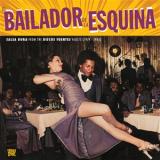
VARIOUS - EL BAILADOR DE LA ESQUINA
  • Super Combo Los Famosos - El Bailador De La Esquina
  • Sexteto Manaure - Bajo El Trupillo Guajiro
  • La Protesta De Colombia - El Campesino
  • Sonora Guantanamera - Sal Y Agua
  • Orquesta Salsa Panamericana - El Fantasma Salsero
  • La Integracin - Hecho Y Derecho
  • Galileo Y Su Banda - No Me Conviene Tu Amor
  • The Latin Brothers - Llorars
  • Piper Pimienta Y Su Orquesta - El Sufrido
  • Fruko Y Sus Tesos - Soy Tu Dueño

This curated collection highlights hard-to-find salsa 45s from the Discos Fuentes vaults-deep cuts that have long flown under the radar but still light up dance floors today. These tracks, once pressed in small numbers, feature top tier musicianship, fiery brass, unforgettable grooves, and lyrical gems that reflect the rich diversity of Colombia's musical landscape. Among the featured artists are: Super Combo "Los Famosos" with their irresistible barrio anthem 'El Bailador de la esquina', capturing the spirit of Cali's street life, Sexteto Manaure, delivering a poignant son that blends regional pride with poetic nostalgia, La Protesta de Colombia, a revolutionary Barranquilla outfit that gave a young Joe Arroyo his early spotlight and channeled the rebellious pulse of the times. This compilation also includes a range of studio experiments and covers-where artists like Piper Pimienta, Galileo y Su Banda, and La Integración reimagined beloved hits, from boleros to vallenatos, through a distinctly Colombian salsa lens. These obscure gems, long scattered across dusty crates and forgotten jukeboxes, now find new life. They speak not just to the past, but to a timeless rhythm that still moves dancers and dreamers alike.

pre-order now24.10.2025

expected to be published on 24.10.2025

22,27
Bob Marley & The Wailers - Rastaman Vibration LP 2x12"
  • A1: Positive Vibration
  • A2: Roots, Rock, Reggae
  • B1: Johnny Was
  • B2: Cry To Me
  • B3: Want More
  • C1: Crazy Baldhead
  • C2: Who The Cap Fit
  • D1: Night Shift
  • D2: War
  • D3: Rat Race

Bob Marley & The Wailers' Rastaman Vibration Analogue Productions' UHQR, the pinnacle of high-quality vinyl! 45 RPM 2LP Ultra High Quality Record release limited to 4,500 copies Mastered from the original tapes by Ryan K. Smith at Sterling Sound Pressed on 180-gram at Quality Record Pressings using Clarity Vinyl® Includes "12 x 12" 8-page booklet featuring new liner notes by musician and Marley biographer Leroy Jodie Pierson (APO Records Direct-To-Disc AAPO 005), plus exclusive photos by Kim-Gottlieb Walker Purest possible pressing and most visually stunning presentation and packaging!

When Rastaman Vibration was first released in America in 1976 it did what some in the music industry considered nearly impossible at the time. It took Bob Marley into the Top Ten alongside disco records and corporate rock, points out Rolling Stone, which rates the album 4 stars. Despite the good cheer of the title track and the upbeat "Roots, Rock, Reggae," Rastaman Vibration contains some of Marley's most intense images of oppression, paranoia and despair. Tracks such as "Who the Cap Fit," "Crazy Baldhead" and "War" are offered by the Wailers with dire urgency as Marley's brutal visions are echoed by his own church choir, the I-Threes.

More than four decades later, neither Marley's music nor his message has lost its sting. Now, Analogue Productions presents perfection — Rastaman Vibration cut at 45 RPM in UHQR format on 180-gram 2LP Clarity Vinyl. This Ultra High Quality Record release will be limited to 4,500 copies, with gold foil individually numbered jackets. For Bob Marley, 1975 was a triumphant year. The singer's Natty Dread album featured one of his strongest batches of original material (the first compiled after the departure of Peter Tosh and Bunny Wailer) and delivered Top 40 hit "No Woman No Cry." The follow-up Live set, a document of Marley's appearance at London's Lyceum, found the singer conquering England as well. Upon completing the tour, Marley and his band returned to Jamaica, laying down the tracks for Rastaman Vibration (1976) at legendary studios run by Harry Johnson and Joe Gibbs.

At the mixing board for the sessions were Sylvan Morris and Errol Thompson, Jamaican engineers of the highest caliber. Of the material on Rastaman Vibration, "War," for one, remains one of the most stunning statements of the singer's career. Though it is essentially a straight reading of one of Haile Selassie's speeches, Marley phrases the text exquisitely to fit a musical setting, a quiet intensity lying just below the surface. Equally strong are the likes of "Rat Race,""'Crazy Baldhead," and "Want More."

These songs are tempered by buoyant, lighthearted material like "Cry to Me," "Night Shift," and "Positive Vibration." Not quite as strong as some of the love songs Marley would score hits with on subsequent albums, "Cry to Me" seems like an obvious choice for a single and remains underrated. This UHQR is remastered at 45 RPM by Sterling Sound's Ryan K. Smith from the original analog master tapes. Each UHQR will be pressed at Acoustic Sounds' industry-leading pressing plant Quality Record Pressings (QRP) using hand-selected Clarity Vinyl® with attention paid to every single detail. These records will feature the same flat profile that helped to make the original UHQR so desirable. From the lead-in groove to the run-out groove, there is no pitch to the profile, allowing the customer's stylus to play truly perpendicular to the grooves from edge to center.

Clarity Vinyl allows for the purest possible pressing and the most visually stunning presentation. Every UHQR will be hand inspected upon pressing completion, and only the truly flawless will be allowed to go to market. Each UHQR will be packaged in a custom clamshell box and will include a booklet detailing the entire process of making a UHQR along with a hand-signed certificate of inspection. This will be a truly deluxe, collectible product. In addition to the UHQR booklet the package will contain a 8-page 12" x 12" booklet containing new liner notes by musican and Marley biographer Leroy Jodie Pierson as well as exclusive photos by Kim-Gottlieb Walker. Pierson is a past performer for Blues Masters at the Crossroads, the two-night historic blues festival at Blue Heaven Studios in Salina, Kansas. He's also recorded a Direct-To-Disc blues album for APO Records. (AAPO 005) Rastaman Vibration — now a landmark production on 180-gram 45 RPM Analogue Productions UHQR Clarity Vinyl!

pre-order now30.07.2025

expected to be published on 30.07.2025

235,25
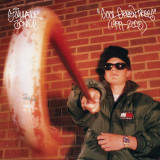
Stimulator Jones - Cool Green Trees (1999-2005) (LP)

"Chasing the funky symphonies that filled my head and my dreams..."

December 25th, 2023 - an Instagram post. Stimulator Jones shared half a dozen FIRE tracks from his beat tape archive. We were immediately drawn to the rough hewn boom bap.

"I'd release that", Rob commented.

Hours of material was shared and the result is this: Cool Green Trees (1999-2005). A collection of beats and loops Stimulator Jones created between the ages of 14-20 at home in his basement, bedroom and computer room in Roanoke, Virginia.

You will not believe the profound soulful genius contained within these naive schoolboy melodies.

December 25th, 1998 - 25 years ago to the day and his much-coveted Yamaha SU10 sampler was finally bestowed upon young Stimmy AKA Sam Lunsford: "I immediately hooked up a CD Walkman to the input jack and looped the beginning two bars of Grover Washington Jr.'s "Mercy Mercy Me". I don't know what exactly was so thrilling about hearing two measures of music repeating over and over but it was so infectious and hypnotizing and enthralling to me. I'll never forget that ecstatic rush of making my first loop - an uncontrollable, gleeful smile plastered all over my face." When you hear the pocket breakbeat symphonies featured here on Cool Green Trees, you'll feel the same sense of frisson.

In the wake of his Stones Throw breakthrough - Exotic Worlds & Master Treasures - Stimulator Jones was pegged by many as a 90s throwback artist. However, he literally IS a 90s artist. He's been recording music most of his life and he's now 40. He created the bulk of Cool Green Trees as a teenager. Everything before 2004 was recorded when Sam was still in school. He was in 8th grade when he made the 1999 tracks - he didn't even have his learner's permit. This album is a snapshot of a young man in a simpler time. Things were still mysterious back then and he was flying blind, relying on his ears and having to figure things out for himself: "I had no road map for becoming a beatmaker. I have been collecting music since I was a kid, I am a lifelong digger and seeker of cool and interesting sounds. I was there in the golden age of Hip Hop, and while I may have been a suburban white kid in Roanoke, Virginia, I was tuned in and I bought so many classic albums when they came out. I was attracted to Hip Hop because of the musical and poetic quality. I was hypnotized by the rhythms, partially because I was a drummer. I didn't brag about collecting my breakbeat records or making beats - it was something I did in isolation. It wasn't something I generally wanted to bring attention to and it didn't really score me any cool points. I certainly wasn't flexing on social media about it."

Hell, he can do that now!

Opener "Pharoah Jones" was inspired by Yesterday's New Quintet and Madlib's ability to capture that classic 70s sound whilst playing all the instruments. Sam created this one stoned afternoon by laying down a 2 bar loop and a shaker loop on his Yamaha SU700 sampler. He hung a microphone from the ceiling and played his Yamaha Stage Custom drum kit over the top before adding ender Rhodes and playing his dad's Selmer tenor sax through an Electro Harmonix Memory Man echo pedal. Yes! Up next, "Ghost Gospel" utilises a dope loop from a gospel record and adds some soul-funk drums overtop, whilst working that filter knob. Says Sam: "The loop reminded me of something Ghostface would rap over. The sample was in 3/4 waltz time but I flipped it for a 4/4 groove, a technique I picked up from RZA. "Ill Feeling" uses sped-up pieces from a dusty old funk record and putting them over a classic NOLA drum loop; gain chopping up a slow, bluesy 3/4 time signature and bending it to a 4/4 groove. Classy shit. "Capital Punishment" features drums tapped in live, inspired by MF Doom's Special Herbs series. "Do Not Adjust" consists loops found on a compilation of 70s French music at Happy's Flea Market, a classic Roanoke digging spot.

The sublime, evocative title track, "Cool Green Trees" was created when Sam was still living at home. He dumped samples off his SU10 into the family desktop and arranged them in a demo version of Pro Tools: "This track was sort of my ode to the DJ Shadow style of sample based production. Super spacey, slow, and moody. The heavily filtered drums were inspired by Alec Empire's 'Low on Ice' album. I later added some scratches and sounds from a Spider Man storybook record." "Chill Scratch" snags the final bit of a bossanova record and pairs it with a drum loop before adding experimental scratching run through an Electro Harmonix Memory Man echo pedal. "Poisonous Fumes" was made using a sampler, mixer and a turntable; a kind of mixtape beat collage with added scratches and sounds from various records. Using dialogue from superhero records was a nod to Madlib. "Welcome Aboard The Starship" is dark, downtempo trip-hop with a spooky bent. Sam paired a slow, hard drum loop with a guitar sample grabbed off a psychedelic rock record. To finish, he added various backwards sounds and weird atmospheric effects and a little scratching. Swoon.

Side B opens with "Keep On Runnin", made on a borrowed Roland SP202 sampler. Having always loved the sound of the Lo-Fi filter on those machines, reminiscent of the Emu SP1200, Sam always imagined Del or another of the Hieroglyphics crew rapping over this beat. You can certainly hear why. "Sounds Impossible" sees Sam experimenting with layering multiple kick samples at different volumes to create patterns similar to those heard by Showbiz and Lord Finesse during their God-level 1995 period. "Painted Faces" was made by chopping up a REDACTED record which he had gotten from Happy's Flea Market and paired it with a REDACTED drum loop. By the time Sam recorded "The Knew Style", he had acquired a shitty old 1960s portable turntable off eBay. It didn't function properly when he bought it but his brother opened it up, cleaned it out and got it working: "I remember he told me that there was a bunch of sand inside of it when he opened it up, as if its previous owner had taken it to the beach. I would take that turntable on my Happy's Flea Market digs so I could preview records...that's how I found this loop."

"Chicken Wing Blues Sauce" loops up a classic blues joint and pairs it with some REDACTED drums. A bit of filtering and arranging et voilà! "Kool Breeze", from 1999, is one of Sam's oldest surviving beats, as is "Sexx Bullets". The Roots sampled the same record, leaving Sam frustrated yet vindicated. "Soul Child" was an early SU10 creation, looping a dusty old Soul Children 45 and pairing it with 70s rock drum loops to great effect. "Take Off Runnin" was another loop found digging with a portable turntable. Paired with some boom bap drums it makes for a hypnotic head-nod groove. "Centurian" was intended to be a little beat interlude a la Pete Rock. The sample is from a sun-dappled soft-psych record and it's paired with a Robin Trower drum loop that just happens to fit perfectly. Sometimes you slap things together kind of haphazardly and magic happens. "Bozack" was the first beat Sam made using Pro Tools, his first foray into using chopped sounds instead of loops, an exciting new world. "Church" is beat interlude using a Phil Upchurch loop with the "Long Red" drums - a favourite break of Dilla et al. Sam was really on a tear in late 2004, probably because he was unemployed and phoneless and able to just make beats all day. He made "Splash One" on a borrowed Yamaha SU700 and again was experimenting with tapping the drums in live with his fingers, instead of using a loop or sequenced pattern. Channeling 9th Wonder, Sam used a water splash sound effect from a Batman record as a percussive element, hence the title (also a 13th Floor Elevators reference). The main loop is a backwards portion of one of his favourite Roy Ayers songs.

"Hank" is another fun little beat interlude thing, created on a borrowed Roland SP202 sampler with the fantastic Lo-Fi effect that resembled the Emu SP1200 at a fraction of the price. "73 goatee", from 99, is another of his oldest surviving beats, created in his bedroom with his Yamaha SU10 and his brother's Vestax MR-300 4-track recorder: "This one will always feel special. I can remember having a feeling all the way back then on the night that I created it that this was a solid beat with a catchy loop. There was something in the Fender Rhodes melody that resonated with me emotionally, and I had never heard a producer sample that portion before. I felt like I had found my own unique sound, my own unique loop. It came from an Ahmad Jamal '73. I actually even recorded myself rapping and scratching over this beat way back then, I still have that version in all its imperfect sloppy glory."

Sam explains just how much these tracks mean to him: "They all have immense historical and sentimental value and I'm proud of them. These beats come from an innocent, simple time when I was just figuring out how to craft these sounds. They're something very personal to me. They are the initial part of a journey that I really was taking *alone*. There was no YouTube. I couldn't Google shit. I didn't even know any other beatmakers, producers or DJs in my town that could teach me anything. It was always just me, alone, in a room with some equipment - chasing the funky symphonies that filled my head and my dreams. What I was doing wasn't cool. Most of my peers thought I was a weirdo and couldn't care less. Creating these sounds was an anti-social endeavour. In a sense, I felt like it was me against the world, and all I had to instruct and assist me were the recordings produced by my heroes - RZA, DJ Premier, Erick Sermon, Beatminerz, Showbiz, Diamond D, Beatnuts, Prince Paul, The Bomb Squad, Pete Rock, Q-Tip, E-Swift, Mista Lawnge, DJ Shadow, Cut Chemist, Peanut Butter Wolf, El-P and so many more...I dedicate this collection to them, and to my older brother Joe who has always been a musical and technical guiding light for me.

This was a time before every kid was a self-described producer and beatmaker, before everyone had a DAW, before Kanye and "chipmunk soul", before Red Bull beat battles, before there was any social media beyond chat rooms and AOL Instant Messenger, before Soundcloud, before SP-404 mania, before lo-fi beats to study to, before Splice, before targeted ads for MIDI chord packs, etc. In 99 when I told people that I had a sampler and made beats I was mostly met with bewildered confusion and indifference. Kids and adults alike would wonder why I got this weird machine for Christmas instead of something worthwhile like a Playstation or a mountain bike or even a guitar for that matter because at least that could be used to make "real music". Back then, sampling was still not widely respected as an art form - it was seen as lazy, talentless and unoriginal at best and outright criminal theft at worst. I had gotten respect for playing drums and guitar and things of that nature but this was a step in the wrong direction in the eyes of many."

The cover photo is a picture of Sam standing on his back porch in the latter part of 1998, just before he got his first sampler. He was 13 years old, in 8th grade. His dad took the picture with his 35mm film camera: "I actually wanted to be pointing my dad's .22 pistol at the camera lens but he wouldn't let me. He gave me an old walking cane to use instead. The Tommy Hilfiger puffer jacket came from the lost and found at William Fleming High School where my mom worked as a secretary. I was thrilled when she brought it home because we never spent money on expensive name brand clothing like that - we were for the most part strictly a sale rack, bargain bin, thrift store, yard sale, flea market kind of family when it came to clothes. My watch is some cheap off-brand fake gold department store watch." Mastering for this vinyl edition was overseen by Be With regular Simon Francis and it was cut by the esteemed Cicely Balston at Abbey Road Studios to be pressed in the Netherlands by Record Industry.

out of Stock

Order now and we will order the item for you at our supplier.

25,63

Last In: 11 months ago
Jesse James - Father We’re Having Trouble Down Here

Way back in 2008 Soul Junction released a 45 on Duane Williams “Yes My Love Is Real” with Duane being one half of the Detroit husband and wife singing duo Beverley and Duane. The duo under the guidance of their lifelong friend Will Hatcher recorded six songs of which two “ We Got To Stick Together” and “Glad I Got You Baby” were picked up by local Detroit label president Woodrow ‘Woody Wilson for release as a 45 single on his Fee label. The popularity of the 45 was to attract attention from the major Ariola label, who picked it up for national distribution during 1978 leading to the subsequent Ariola album ‘Beverley & Duane”. As the 1980’s dawned Beverley and Duane recorded a solitary 45 single for the independent Detroit Brown Bomber label “Love/You Belong To Me”. The label was owned by John L. Barrow a nephew of former heavyweight boxing champion Joe Louis, (Brown Bomber being Louis’s nickname). Beverley and Duane later moved to the west coast until their amicable divorce which led to Duane returning to his native Detroit to reacquaint himself with his former mentor Will Hatcher. This meeting of old friends led to the creation of Duane’s first solo project which Will brought to Soul Junction in late 2007. Hot on the heels of Duane’s hugely popular Soul Junction 45 came his subsequent CD album “These Songs Are For You” (SJ5001) released in 2009. Contained within this album was the very pertinent gospel/social commentary song “Father We’re Having Trouble” a song which two very close and knowledgeable friends of mine the late John Anderson and Bill Randle claimed had all the right ingredients for a potential hit record. Over the ensuing years this song has always remained in my thoughts until a few years ago I broached the idea with my good friend Jesse James recording a cover version of it, Jesse upon hearing the song was very receptive to the idea. Another period of time elapsed before we again reignited the idea. A decade or so on from Duane’s original version and the lyric’s of this particular song still remain as pertinent as ever, if not more so! During early 2020 Jesse entered, Con Funk Shun multi-instrumentalist and vocalist Felton Pilate’s Felstar Studio in Atlanta to lay down the basic tracks with Felton acting as co-producer on this project. Everything was progressing nicely until a worldwide pandemic intervened. With Jesse locked down in his new home on the West Coast and Felton in Atlanta the project unfortunately came to a holt. During this enforced period of inactivity further racial and political upheaval occurred which only added more poignance to the project. Eventually with the lifting of lockdown restrictions Jesse finally made it back to Atlanta to finish the project, the fruits of which you have before you now.

out of Stock

Order now and we will order the item for you at our supplier.

18,07

Last In: 18 months ago
Lawne - Attic LP

Lawne

Attic LP

12inchWAHLP032
Wah Wah 45s
29.11.2024

Formed in 2019, Lawne is the result of a meeting of minds between old friends and self confessed music nerds Joe Nicklin and Joe Martin. Their sound draws upon myriad influences with dub, electronics, hip hop, psych, jazz, post-punk and Afrobeat all somehow ingrained within the mix.

It's something that evolved during at a time of change for both of them, as Joe Nicklin explains:

"The start of this project coincided with me moving onto a canal boat, which was a hugely rewarding time of my life but not without its challenges. You can hear some of my boating vents coming through in the lyrics of Beta Pan and Ame Tova.

Another challenge during this time was trying to figure out a way of still playing and recording drums that wasn't going to break the bank. I decided to start renting a tiny storage space near Caledonian Road in North London, that I would convert into a makeshift studio and soon learned that corrugated iron sheets aren't the best walls for a drum booth. My friend cut me some curtains and a few egg boxes later we were able to insulate the thing, sort of.

These limitations meant that we had to keep recordings pretty simple and I feel like this set the tone for the whole record. Whether it was digging out my childhood bass guitar for Joe to play, squeezing every last drop out of Logic presets or mumbling into a SM57 for the first time, we made do with what we had and I'm proud of the charming thing we were able to create. I felt like I was learning on the job at times for this album and I'm grateful for what it has taught me, whilst being excited for what we can do next. As I was moving off the water and out of my lockup, the album masters were also starting to trickle through. A fitting close to that chapter of my life and the making of our first album."

Joe Martin reflects more on how their unique sound came about:

"It's interesting thinking back to the sound we were exploring when we first started writing together, and how different much of the record is to that original sound. We didn't set out a clear musical direction and that meant we were rarely constrained stylistically, we could shift between genres and feels and grooves, take inspiration from the new and the old and it still sat comfortably with what we were trying to do. I think the eight tracks we landed on illustrates that nicely.

The record's named after the self storage unit we used as a studio for many years, there's something quite poetic about parting ways with the space within weeks of the album coming out; a final homage to the place it all started."

out of Stock

Order now and we will order the item for you at our supplier.

25,84

Last In: 14 months ago
Joe Walsh - The Smoker You Drink, The Player You Get LP 2x12"

True audiophile joy — now cut at 45 RPM 2LP for better tracking, exceptional bass!
Remastered by Kevin Gray at Cohearent Audio from the original master tapes
Plated and pressed on 180-gram vinyl at Quality Record Pressings!
Stoughton Printing gatefold tip-on heavyweight cardboard jacket


Praise for the 33 1/3 version of The Smoker You Drink, The Player You Get:

"(Side one) ends with the appropriately titled 'Happy Ways,' a Latin-tinged guitar-fest with lovely chunky bass lines that sounds absolutely glorious on this Analogue Productions pressing. The zing of steel string guitar almost sounds dead on the CD and tired on my ancient vinyl pressing, so this is clearly not one of those remasters that's based on an umpteenth generation copy of the tapes. ... You owe it to yourself to hear this album — and it will not sound any better than this spectacular pressing." — Recording = 8/10; Music 10/10 — Jason Kenedy, Hi-Fi+, Issue 148

"An outstanding new 180gm LP reissue from Analogue Productions, with improved sound thanks to a sparkling new remaster by Kevin Gray at Cohearent Audio, makes it clear that this 1973 release remains — with the possible exception of 1978's But Seriously, Folks . . . — the undisputed highlight of Walsh's solo career. ... Another week, another beautiful-sounding, wonderfully packaged reissue from Analogue Productions." Read the whole review here. — Robert Baird, May 2017

In between his stints with the James Gang and the Eagles, Joe Walsh tackled his second solo studio album The Smoker You Drink The Player You Get which became his most successful solo outing. The 1973 LP continued the heavy and light rock mix of tracks found on his previous release, Barnstorm.

Analogue Productions has done reissue justice to the album that AllMusic decries "features some of the most remembered Joe Walsh tracks, but it's not just these that make the album a success. Each of the nine tracks is a song to be proud of. This is a superb album by anyone's standards."

To obtain the best sound possible we turned to Kevin Gray at Cohearent Audio to remaster this superb album from the original analogue tapes. Next we plated the lacquers and pressed LPs on 180-gram audiophile vinyl at the world's best LP maker, Quality Record Pressings. Top it all off with a deluxe Stoughton Printing gatefold tip-on jacket and you've got the makings for audiophile joy.

But would we stop there? Hardly. Now with our 45 RPM release, the best-sounding version of this rock music gem gives listeners an even richer sonic experience. The dead-quiet double-LP, with the music spread over four sides of vinyl, reduces distortion and high frequency loss as the wider-spaced grooves let your stereo cartridge track more accurately.

This amazingly eclectic rock album has Joe's smash "Rocky Mountain Way," his hit "Meadows," plus "Bookends," "Wolf; Dreams" and more! Walsh's ability to swing wildly from one end of the rock scale to the other is unparalleled and makes for an album to suit many tastes.

pre-order now31.05.2024

expected to be published on 31.05.2024

83,99
VARIOUS - KIOSQUE D'ORPHEE - UNE EPOPEE DE L'AUTOPRODUCTION EN FRANCE - 1973/1991 LP 3x12"

"For a long time, I'd come across these discs without really understanding what connected them, apart from a button and that famous logo designed by René Dessirier. Then, with a little more digging, I discovered the "self-production" link. For choirs, schools, folk singers, young pop groups, popular homes and even great composers who engraved unique copies of certain recording sessions...

The French equivalent of the English "Derby Service", the Kiosque d'Orphée, formerly at 7 Rue Grégoire de Tours in the 6th arrondissement, was taken over by Georges Batard in 1967 and moved to 20 Rue des Tournelles in the 4th arrondissement of Paris. The adventure lasted until 1991. Georges Batard was a sound engineer who used a Neumann tube engraver to engrave acetates from the tapes he received, before printing the precious vinyls in the press factories of the day, where he was able to produce very small runs of between 50 and 500 copies.

Of course, there were other structures for releasing his records, such as Voxigrave or, later, FLVM, but none of them had so many records in their catalog. Le Kiosque d'Orphée was neither a label nor a publisher, but a structure that allowed you to press your own vinyl, at a time when it was quite an adventure to get your first 45 rpm or 33 rpm album released!

Georges Batard was described as passionate and conscientious. His son, bassist Didier Batard, wrote of him:
"Georges was passionate about recording and reproducing the stereo sound of his great passion, music. He paid close attention to distortion rates, signal-to-noise ratios, response curves, rise times and other damping factors in audio equipment. He was looking for the exact reproduction of concert hall sound in his living room (with the same sound level, if possible...). In the late '50s/early '60s, he found other sound enthusiasts in AFDERS (Association Française pour le Développement de l'Enregistrement et de la Reproduction Sonores). He became its honorary president. Every Saturday afternoon, its members met to test au- dio equipment. Their opinions were published in the monthly Revue du Son.

All you had to do was send in your tapes and choose the number of record copies you'd like to take home with you, so you could finally share your creations and, in a way, exist. You could opt for a generic sleeve, available in several colors, directly customizable with your name and credits, or you could design your dream sleeve yourself in your living room or at a printer's.

This "Do It Yourself" temple gave birth to some superb pouches. Stencilled, hand-written, illustrated with paintings, drawings, illustrations by friends or girlfriends of the time, photo prints hastily stuck in the middle of a blank, white sleeve, on which the traces of time would leave their imprints, so that collectors and the curious would come and buy them decades later, with the promise of a musical discovery, unfortunately not always fulfilled...

What most of these records have in common is the youth of their songwriters, whether or not they've had a career. Stories of buddies, of getting by and dreams of glory made up this catalog. Most of them were amateur productions, both in terms of the level of the musicians and the quality of the recordings, made on a two-track or, the ultimate luxury, a 4-track in a teenager's bedroom or parents' living room.

It was the beginning of the home studio, thanks to the advent of the Revox portable tape recorder. A bit of a shaky DIY system, but, in return, the luxury of setting no limits: one-sided tracks, no outside censorship, no artistic director, no manager, no Barclay or EMI/Pathé Marconi logos...

When you finally had your own record, you could give it away or sell it to friends, family or after concerts. You could also drop it off at the nearest record shop, with undisguised pride.

It was also a calling card that could be sent to radio stations or music labels, in the hope of launching a career...

Many of the protagonists in this story tried to sign with labels, but in those days, bridges were not so easy to build between one's hometown, or even one's village, and the major or more specialized label that might have released these records. At the time, the advertisements published in the press by the Kiosque d'Orphée opened up the field of possibilities for provincial composers. It was now possible to make their own record, without having to go through the process of signing with a label.

Some of the composers who have gone on to make a career have used this channel to release their first record or parallel projects (Claude Engel, Dominique A, Andy Emler, Michel Deneuve, Claude Mairet, Mick Piellard, Tristan Mu- rail...) and sometimes even single or very limited pressings of work or promotional copies (Bernard Parmegiani, Jef Gilson...).

This album is the conclusion of a long investigation, begun six years ago. It took a long time to find the records, scattered all over the place, in the homes of collectors and sometimes the musicians themselves, and then to listen to them, sometimes painstakingly, to unearth these moments of grace.

From this work, 23 tracks remain, but there are dozens of others that could have been included, so we had to choose, and the choice had to be as universal as possible. This selection is obviously not objective, but I hope you'll like it.

Today's music is raw, touching and powerful. "

Jean-Baptiste Guillot - Born Bad Records

pre-order now15.03.2024

expected to be published on 15.03.2024

35,50
Joe Lovano - Trio Fascination: Edition One LP 2x12"

The acclaimed Cleveland-born saxophonist Joe Lovano came to Blue Note Records in 1990 and over the next 25 years became one of the most recorded artists in the label’s history, building a formidable and far-ranging catalog that explored the full breadth of his artistry. Recorded in September 1997, Trio Fascination: Edition One stands out as one of the more remarkable sessions in Lovano’s discography with the saxophonist joining forces with two all-time legends—bassist Dave Holland and drummer Elvin Jones—in a spare trio setting that finds these three masters conversing freely. Throughout Lovano can be heard on tenor, soprano, alto, and straight alto saxophones, as well as alto clarinet, and the set consists of nine creative Lovano originals including the pulsing opener “New York Fascination,” the spacious “Sanctuary Park,” the Sam Rivers tribute “Studio Rivbea,” and a stunning rendition of the lone standard “Ghost of a Chance.” This Tone Poet Vinyl Edition marks the album’s first-ever release on vinyl.

The Tone Poet Audiophile Vinyl Reissue Series was born out of Blue Note President Don Was’ admiration for the exceptional audiophile Blue Note LP reissues presented by Music Matters. Was brought Joe Harley, a.k.a. the “Tone Poet,” on board to curate and supervise a series of reissues from the Blue Note family of labels.

Extreme attention to detail has been paid to getting these right in every conceivable way, from the jacket graphics and printing quality to superior LP mastering (direct from the master tapes) by Kevin Gray to superb 180g audiophile LP pressings by Record Technology Inc. Every aspect of these Tone Poet releases is done to the highest possible standard. It means that you will never find a superior version. This is IT.

This stereo Tone Poet Vinyl Edition was produced by Joe Harley, mastered by Kevin Gray (Cohearent Audio) from the original analog master tapes, pressed on 180g vinyl at Record Technology Inc. (RTI), and packaged in a deluxe gatefold tip-on jacket.

pre-order now02.02.2024

expected to be published on 02.02.2024

60,46
Barbara Moore - Vocal Shades And Tones (LP)

Vocal Shades And Tones is a miraculous leftfield library classic from the genius mind of celebrated UK composer/singer/vocal arranger Barbara Moore. It's a heavenly groove-based blend of jazz, Latin, soft-psych, folk-funk and gospel soul. Recorded for the legendary Music De Wolfe in 1972, it's an audacious start-to-finish listen, as dizzying as it is dazzling. It's a perfect snapshot of a musical era, supported by Moore's glorious vocal arrangements. Widely regarded among collectors, DJs, and lounge/easy-listening acolytes as an absolute essential it is viewed as the holy grail by many production music heads, rarely appearing for sale and disappearing in a flash when it does. Indeed, originals now go for over £300 and it's easy to see why. Just one of the reasons why this fresh Be With reissue, part of a wider De Wolfe reissue campaign, is so utterly crucial.

Racing out the gate, the driving "Hot Heels" is a bright, sophisticated scat groove which sounds Brazilian, richly produced as if coming by the hand of Arthur Verocai. Yes, *that* good. It's followed by "It's Gospel" which is, er, a wonderfully slow and deeply soulful gospel treasure. The appropriately monikered "Steam Heat" is a darker, breathy gem, one for salacious crates and one of the record's most infamous tracks. "Fly Away" is pastoral West Coast soft rock, very much in conversation with John Cameron and Keith Mansfield's epochal KPM recording, Voices In Harmony. "His Name Was" is a stop-you-dead-in-your-tracks Beach Boys accapella church-organ stunner, whilst "Swing Over" is another carefree, richly produced sun-dappled smasher. The gentle Bossa and sunshine soul of the aptly-titled "Touch Of Warmth" closes out a virtually perfect A-Side.

The B-Side opens with the easy grace and dramatic build of "Voice Force Nine". The jaunty "Very Fine Fellow" may be the only track to slightly grate so we advise heading to the slower, moody "Shades-Tones", eminently more compelling with sparkling, hypnotic piano throughout, underpinning the gorgeous wordless vocals. Just beautiful. It was sampled by Redman for his Method Man-featuring "Do What Ya Feel" on the great Muddy Waters. We're back in Brazilian territory with the cool, uptempo "I'm Feather" before swooning to the warm, relaxed "Drifting", another total highlight which was famously sampled by Koushik on his legendary remix of Madvillain's "America's Most Blunted (Doom's Verse)". The penultimate track, "Take Off" is a bright, organ lounge groove before this remarkable set is rounded out by the beaty "Fly Paradise". It's so so good, it sounds like Rotary Connection fronted by The Mamas & the Papas. As noted in a recent Guardian article on Moore's life, "there is a plushness and electricity in the tight vocal harmonies that spring out, sung with the precision of cathedral choristers decades before Auto-Tune." Amen.

In the 1960s, Barbara Moore was a member of Top of the Pops’ resident vocal-harmony group, The Ladybirds and sang backing vocals for Dusty Springfield’s TV show. Her own outfit, the Barbara Moore Singers, were regulars on TOTP, singing with Jimi Hendrix when he performed "Hey Joe" live in Lime Grove Studios. An important detail for Moore was the shepherd’s pie she bought Hendrix when she found him alone, looking emaciated, near the BBC canteen. By 1970, she was working as a session singer for De Wolfe and, by 1972, was composing her own tracks for De Wolfe and working within their tight creative strictures. Each short track had to evoke an obvious mood and theme, with no significant key or tempo changes. Her response, this very album, managed to stay between the lines while cohering as an overarching artistic masterpiece.

The audio for Vocal Shades And Tones has been carefully remastered by Be With regular Simon Francis, ensuring this release sounds better than ever. Cicely Balston's expert skills have made sure nothing is lost in the cut whilst the records have been pressed to the highest possible standard at Record Industry in Holland. The original, iconic sleeve has been restored here at Be With HQ as the finishing touch to this long overdue re-issue.

out of Stock

Order now and we will order the item for you at our supplier.

23,40

Last In: 2 years ago
John Coltrane - Blue Train – The Complete Masters (2x12")

To mark the 65th anniversary of the album’s recording, Blue Train will be released in two special editions on September 16 as part of Blue Note’s acclaimed Tone Poet Audiophile Vinyl Reissue Series. A 1-LP mono pressing of the original album will be presented in a deluxe gatefold tip-on jacket, while the 2-LP stereo collection Blue Train: The Complete Masters will include a second disc featuring seven alternate and incomplete takes, none of which have been released previously on vinyl, and four of which have never been released before on any format. The Complete Masters comes with a booklet featuring never-before-seen session photos by Francis Wolff and an essay by Coltrane expert Ashley Kahn. Both Tone Poet Vinyl Editions were produced by Joe Harley, mastered by Kevin Gray from the original analog master tapes, and pressed on 180g vinyl at RTI. Blue Train: The Complete Masters will also be released as a 2-CD set and digital collection


“Few studio experiences I’ve had can compare with the thrill of listening to the original master tapes—mono, stereo and alternate takes—of Blue Train,” says Harley. “I consider these two new versions the definitive editions of this masterpiece performance by John Coltrane.”

pre-order now17.08.2023

expected to be published on 17.08.2023

67,19
Nucleus - We’ll Talk About It Later

Their masterpiece? With breaks for dayyyyyys and an almost ambient, heavy jazz atmosphere throughout, *this* is the apex of British jazz-rock fusion. We'll Talk About It Later was first released on Vertigo in 1971 and original copies are now very tricky to score. Like all the Nucleus records, it’s aged ridiculously well and this Be With re-issue, re-mastered from the original analogue tapes, shows off just why this deserves to be back in press.

Genius trumpeter and visionary composer Ian Carr was one of the most respected British musicians of his era. He was a true pioneer and saw the potential in fusing the worlds of jazz with rock, just as Miles Davis and The Tony Williams Lifetime did in the US. In late 1969, following the demise of the Rendell-Carr quintet, and tiring of British jazz, Carr assembled the legendary Nucleus. Regarding music as a continuous process, Nucleus refused to “recognise rigid boundaries” and worked on delivering what they saw as a “total musical experience”. We can get behind that.

Under bandleader Carr, Nucleus existed as a fluid line-up of inventive, skilled musicians. This constant evolution and revolution was all part of the continuous musical exploration and discovery that took jazz to new levels. And the music has kept relevant. To steal a line from a review of our re-issue of Roots, when it comes to anything Nucleus “it’s basically already hip-hop”.

We'll Talk About It Later is arguably Nucleus's best album. Not only that, it's in the top 5 of all fusion albums. By the time Nucleus entered Trident Studios in September 1970 to record Elastic Rock's successor, they had already won a best group award at the Montreux Jazz Festival. Once again presented in a Roger Dean designed die-cut gatefold sleeve it continued to demonstrate the chemistry and interplay that worked so brilliantly on Elastic Rock; Carr's sumptuous trumpet and flügelhorn lines, Karl Jenkins's funk-filled electric keyboards, Chris Spedding's wah-wah guitar, Brian Smith's sax and the rhythmic foundation of drummer John Marshall and bassist Jeff Clyne.

The group work and insane musicianship Nucleus were famed for is in evidence from the off. The intensely funky "Song for the Bearded Lady" is absolute FIRE, blasting out the speakers to leave listeners floored. Counterpoint riffing segues into a spacious groove and a Carr trumpet solo demonstrating the influence of electric Miles from the period. The stop-start funk of "Sun Child" would appeal to Soft Machine devotees whilst the genuinely touching "Lullaby for a Lonely Child" is a lovely downtempo ballad. Featuring an understated, reflective horn line from Carr and Smith and atmospheric, shimmering bouzouki from Spedding, there's an exotic flavour which contributes to the bliss. The ominous, sleazy title track retains a swaggering menace and is not the only track to lend a sort of heavy stoner rock atmosphere. The guitars and bass are deep and low throughout, conjuring heavy psych moments to go with the actual jazz and even funk. To say this album was in conversation with Bitches Brew would not be overstating the sheer brain-frying brilliance.

The Weather Report-adjacent "Oasis" opens Side B, a colossal track featuring nearly 10 minutes of steadily building melodic horns, keys and choppy guitar riffs. So ace, it could easily go on for another 10. Mesmeric. Spedding adds unique vocals to the undeniable groove of "Ballad of Joe Pimp" whilst saxophonist Smith's duet with drummer Marshall at the conclusion of "Easter 1916" - inspired by the Yeats poem about the Irish nationalist uprising in Dublin - adopts the wildness of the most incendiary free jazz.

This Be With edition of We'll Talk About It Later has been re-mastered from the original Vertigo master tapes, Simon Francis’ mastering working together with Cicely Balston's cut at AIR Studios to weave their usual magic with these wonderful recordings. The stunning die-cut sleeve has been restored with the original gatefold window pane depicting the Irish uprising in 1916. Incredible, timeless, guaranteed spine-chills.

out of Stock

Order now and we will order the item for you at our supplier.

26,01

Last In: 3 years ago
NEUTRAL MILK HOTEL - THE COLLECTED WORKS OF NEUTRAL MILK HOTEL -BOX SET 9x12"
 
55

The two full-length records that Jeff Mangum made as Neutral Milk Hotel sound both in and out of time. Like translations of a shared subconscious, 1996's On Avery Island and 1998's In the Aeroplane Over the Sea give voice to the perennial spirit of youthful epiphany, of beginning to see the world clearly, to process and express it-no matter when you encounter them. With lo-fi indie rock, accordion, singing saw, tape collages, the so-called "zanzithophone" and beyond, Neutral Milk Hotel created an eternal entry into their Elephant 6 scene and an enduring feeling of possibility. Mangum was born in the small city of Ruston, Louisiana, in 1970, coming of age within the '80s and '90s indie and punk undergrounds, a movement of teenagers recording in their bedrooms, sharing zines and trading tapes, listening to hardcore and experimental music on college radio. For all the mythology Mangum's elusive persona has accrued-particularly during the 15 years immediately following Aeroplane, when he abruptly left the band behind-it's the beguiling songs themselves that have resonated so deeply for generations. In 2011, Mangum collected nearly all of the band's recorded output in a limited-edition box set (self-released under Neutral Milk Hotel Records, a small operation helmed by Mangum and his mother) which is now re-pressed by Merge. // CONTENTS: Black matte box is a 2-piece telescoping casewrapped package. Outer shrink-wrap includes a front sticker with "Neutral Milk Hotel," and a back sticker listing box contents. The box set includes 2 folded posters, each printed one side and each 24 x 24 inches when flat, and 1 postcard, printed front and back with box set information and sized 3.75 x 5 inches. Vinyl records: 1. In the Aeroplane Over the Sea: LP is 11 tracks pressed 33RPM to black vinyl in a gatefold jacket + printed insert for full album download. --- 2. On Avery Island: 2-LP is 12 tracks pressed to double black vinyl in a gatefold jacket + 11 x 11 printed insert + printed insert for full album download. Sides A, B and C pressed 45RPM. Side D pressed 33RPM. --- 3. Live at Jittery Joe's: 12-inch picture disc is 11 tracks pressed 33RPM to a full color picture disc in a heavyweight poly jacket + printed insert for full album download. --- 4. Ferris Wheel on Fire: 10-inch is 8 tracks pressed 45RPM to black vinyl in a printed jacket + postcard insert + printed insert for full album download. --- 5. Everything Is: 10-inch is 7 tracks pressed 45RPM to black vinyl in a printed jacket + postcard insert + printed insert for full album download --- 6. "Little Birds": 7-inch is 2 tracks pressed 45RPM to black vinyl in a printed jacket + printed insert for full album download 7-inch housed in a heavy-weight poly jacket. --- 7. "You've Passed": 7-inch is 2 tracks pressed 45RPM to black vinyl in a printed jacket + printed insert for full album download. 7-inch housed in a heavy-weight poly jacket. --- 8. "Holland, 1945": 7-inch is 2 tracks pressed 45RPM to black vinyl in a printed jacket + printed insert for full album download. 7-inch housed in a heavyweight poly jacket.

pre-order now24.02.2023

expected to be published on 24.02.2023

168,03
KENYA WGANDA - AFRICA 5000 LP

Kenya Wganda

AFRICA 5000 LP

12inchVAMPI267
Vampisoul
04.11.2022

Wganda Kenya was ahead of its time, anticipating current contemporary Afro-Latin-funk trends in a prescient way that has inspired a legion of fans across the globe. As part of that legacy, "Africa 5.000" (1975) has a legendary reputation as one of Discos Fuentes' best hard-to-find Afro Caribbean funk records and is a highly prized collector's piece. This LP features several classic dance floor gems as well as some lesser-known nuggets and a non-album bonus cut, plus informative notes. "Africa 5.000" (1975) has a legendary reputation as one of Colombia's best hard-to-find Afro-funk records and is a highly prized collector's piece today. The epic 'La torta' ('The Cake') kicks things off with a lively Colombian interpretation of Haitian compas. The tune is still remembered as a big picó (amplified sound system) hit at the verbenas (outdoor dance parties). 'Fiebre de lepra' ('Leprosy Fever') was also released as a 45 single and is certainly one of Wganda Kenya's wilder tracks. Funky wah-wah guitar, makossa style bass, manic organ, and feverishly insane vocals (from Wilson "Saoko" Manyoma and Joe Arroyo) indicate that Fruko and his pals were having a ball goofing around in the studio. If for no other reason, "Africa 5.000" is sought after for being the album containing Fruko and Javier García's outrageously funky and off-kilter 'Tifit hayed', which has become a tropical dance floor favorite in recent years. Again the "kitchen sink" approach is employed, including massive Latin bass lines, tasty Farfisa organ stabs, a bluesy, jazzy piano solo, and plenty of humorous vocal sound effects (including animal noises and lip burbling). However, it's the stomping break beats and cowbell counterpoint that has kept dance floors busy. Side B leaps out of the speakers with the heavy, strutting 'El caterete', which was the flip side to the 'Fiebre de lepra' single and is based on the 1970 song 'Cateretê' by Brazilian singer/songwriter Marku Ribas. Like its sibling Fuentes studio band Afrosound, Wganda Kenya was ahead of its time, anticipating current contemporary Afro-Latin-funk trends in a prescient way that has inspired a legion of fans across the globe, and this reissue of "Africa 5.000" will only serve to further cement the band's growing reputation amongst today's diggers of tropical psychedelia. First time reissue.

out of Stock

Order now and we will order the item for you at our supplier.

23,49

Last In: 3 years ago
Grounation - THE MYSTIC REVELATION OF RASTAFARI (Boxset)

Like Sun Ra's Arkestra and John Coltrane are to jazz, the Mystic Revelation of Rastafari are to reggae – the ultimate expression of roots music and Rastafarian ideology in reggae music, music functioning at a high level of spiritual consciousness combined with an equally avant-garde and forward-looking approach to sound.
The group's stunning, unique and groundbreaking 1973 album ‘Grounation’, a mighty conceptual triplealbum (the first ever reggae triple!) is, similar to Marvin Gaye's 'What's Goin' On', a definitive allencompassing cultural statement of its time and place. A sprawling album of raw and unique cultural expression that combined Rastafari consciousness with deep spiritual jazz music – an absolute and essential classic of Reggae music.

The Mystic Revelation of Rastafari group came into existence at the start of 1970s, the union of two artists (and groups) of equal repute – Count Ossie and his African Drums and saxophonist Cedric ‘Im’ Brooks’ and his group,

The Mystics. Both Ossie and Brooks were alumni from the great Studio One Records. Master drummer Count Ossie and his collective of Rastafarian drummers performed for Haile Selassie on his
momentous visit to Jamaica in 1966. Cedric Brooks came out of the Alpha Boys School – the fertile breeding ground of musicians who dominated the Jamaican music scene from the 1960s onwards; Tommy McCook,

Don Drummond, Johnny Moore, Headley Bennett, Johnny Osbourne, Yellowman, Leroy Smart, Bobby Ellis, Joe Harriott, Eddie Thornton, Vin Gordon, Rico Rodriguez, Owen Gray, Leroy ‘Horsemouth’ Wallace and more.

The Mystic Revelation of Rastafari’s ‘Grounation’ is a massive opus, a work of profound musical genius that tells the story of Jamaica through music and words. The album is a cornerstone in the history of reggae, a unique and other-worldly album the like of which has never been made since.

Soul Jazz Records are releasing this long-revered album release in two unique vinyl formats: a one-off pressing limited-edition deluxe box set triple-vinyl edition complete with a free 45 single + art print + an exact-replica reproduction Mystic Revelation 1977 mag/zine + download code; And secondly as a triple album + download
code. There is also a deluxe 2 CD version
complete with large format booklet encased in
double-walled slipcase. All editions come with
extensive new sleevenotes, photography, exact
reproductions of the original text and artwork

out of Stock

Order now and we will order the item for you at our supplier.

68,03

Last In: 3 years ago
DIANA KRALL - Live In Paris

Available for the first time on 180 Gram 45rpm Double Vinyl! One of Diana's most sought after albums!

The first-ever live concert recording from Grammy®-winning vocalist/pianist Diana Krall was Recorded at the Paris Olympia Theatre. Here finally, captured in amazing audio quality, is an album showcasing the magic of Krall’s concert performances.

Krall and her band – perform some of the tunes from Krall’s studio recordings, such as "East of the Sun (West of the Moon)" and "Devil May Care." They are joined by special guests John Pisano (acoustic guitar) and Paulinho DaCosta (percussion) for several tracks, including the Gershwin’s "S’wonderful." The Orchestre Symphonique European, conducted by Alan Broadbent with special guest conductor Claus Ogerman, is featured on the upbeat "Let’s Fall in Love" and a haunting interpretation of "I’ve Got You Under My Skin."

Audiophile Audition / audaud Rated 4 1/2 stars
"ORG has remastered the tapes for audiophile 45 rpm vinyl. The results are flawless. There is warmth in the tones that reflect the acoustic sound of the band. The separation is precise, especially in the mixes with the orchestra. The intricate registers and suppleness of Krall’s voice are presented with impeccable clarity." - Audiophile Audition, audaud, September 2011

Soundstage Rated 5 out of 5 for Recording Quality!
"A favourite of audiophiles because her music and voice lend themselves to purist recording techniques, Diana Krall perpetually sounds in great form on her recordings... The sound, remastered by Bernie Grundman, is clear, spacious and well defined -- outstanding in every way, the backing players as vivid as Krall's voice and piano..." - Marc Mickelson, soundstage, May 2009

"One of Diana Krall’s most beloved CDs, Live in Paris, has been given a loving audiophile LP remastering treatment by ace engineer legend, Bernie Grundman and produced by an audiophile label new to us, Original Recordings. The shimmering string arrangements on Let’s Fall in Love and I’ve Got You Under My Skin, are testament alone to the real life power of vinyl..." - Audiophile Audition

"Bernie Grundman’s remastering for vinyl puts Live in Paris in the gold plated category for the legions of Krall aficionados. This two-LP audiophile edition would make an ideal late night listening experience, or the perfect background soundtrack for a special dinner party." - Audiophile Audition

Also on this recording is a special bonus studio track, a rendition of Billy Joel’s "Just The Way You Are" featuring Michael Brecker's beautiful tenor sax solo.

pre-order now10.06.2022

expected to be published on 10.06.2022

96,60
Coast To Coast - Coast To Coast

Our second LP this month is an unreleased magical modern soul LP from the band Coast To Coast, the full story below by band leader Mark Beiner...


I met Ben iverson in 1976 when I was 17 years old. I was a junior at Newtown High School in Elmhurst, Queens. At that time, I took a part time job as a Produce Clerk at Walbaum's Supermarket on Northern Boulevard in Jackson Heights, Queens, where I met Ben Iverson who was the "Frozen Food Manager." In between the music, this job was steady income, and he and his Wife, Diane, started a family and raised two Daughters, Tonia and Cytherea, whom I am still in contact with today.

Back then, I remember going to work early just to talk to him about his musical background and his time spent in the 50's and 60's with the Ohio Doo Wop Group, "The Hornets", or better known as, "Ben Iverson and The Hornets." However, Ben was somewhat quiet and at a loss for words when I questioned him with regard to "Ben Iverson and the Nue Dey Express", as well as his short career as Manager and Songwriter for Brooklyn's own, "Crown Heights Affair" in the early 70's.

Between the 50's and 60's, "Ben Iverson and The Hornets" shared billing at music events with recording artists such as, The Drifter's, Bill Haley and The Comets, Pat Boone, Etta James, Mary Wells, Nancy Wilson, Jackie Wilson, Sam Cooke, Aretha Franklin, Lloyd Price and Al Green. Many of these names got their start in the 50's, which Ben met at music concert events hosted by Radio Disc Jockey, Alan Freed. Alan was truly the first Concert Promoter for Doo Wop, Rhythm & Blues, and early Rock & Roll.

In 1978 after Ben and I discussed getting together and composing music, I started writing poetry and expressing in writing my break up with my college girl friend, Paula Vasta. Paula's middle name was Marie, so in kidding around, I would call her "Paula Marie." Ben thought my lyrics were "powerful" and wanted to put them in music. Thus our first recorded 45 rpm record called "Paula Marie", backed with "I Want You Dear." This launched our musical partnership and within a year, the Coast to Coast Band was formed. Ben and I went on to writing two albums worth of material, which in turn gave us a lot of time and presence on stage at our live gigs.

The regular Coast to Coast Band members consisted of Ben Iverson on Lead Vocals, Rhythm Guitarist and Co-Executive Producer, Joe Crowley, who is known today as "New York Congressman Joe Crowley." Carl (Woody Wood) Morton on Bass Guitar, Jimmy Johnson on Keyboards. Woody and Jimmy used to hang and play rap in its early days with "Run DMC" in St. Albans, Queens. Lead Guitarist, Lou Jimenez, currently owns his own recording studio, Music Labs in Elmont, Long Island. On Drums, Eddie Byam, on Alto Sax, Jay Cohen, who in the 70's used to record for "Gary U.S. Bonds." Gary Pevols on Trumpet. On Bone, Scott Burrows, Trumpet player, Steve Becker, whom we lost to Testicular Cancer at the age of 25, along side Neil Levine, Stan Stockley, Tom Russo and additional members that came and went that we used for live gigs and studio recordings.

In addition, special recognition goes out to our Producer, Recording Engineer and Multi-sound Recording Studio, Owner, Dave Weiner and staff. Dave and I launched Multi-Sound Records under the Multi-Sound label in 1980.

Last, of course myself, Mark Beiner, where I served as Executive Producer, Songwriter, Business/Marketing Manager, and background vocals.

Unfortunately, Ben Iverson passed away on March 21, 2008, and cannot be here to share this with us, but his music and voice still lives on!

out of Stock

Order now and we will order the item for you at our supplier.

22,23

Last In: 4 years ago
Early Clover - Who Are You / I Wanna Take A Chance With You

Ridiculously rare & sought after private pressed 45 from Atlanta, Georgia, that hardly ever turns up for sale in its original issue. It features the seemingly widely unknown pounding modern soul dancer "I Wanna Take A Chance With You", an absolutely killer tune with stellar production and vocals from the talented Early. A side's "Who Are You " is an intimate and deep piece of soul music with superb songwriting techniques.


Featured on the playlists of very few crate digging DJ's out there, this 45 gets an overdue and legitimate repress in its original form. Essential! Born and raised on a small farm in the heart of Georgia, lead singer and guitarist Early Clover started his own band Early Clover and The Bosa Novas' at the age of 14. In1967,
he changed the band's name to the Middle Georgia Soul Drifters'. They became very popular locally and began being the backup band for such acts as Rufus Thomas, Joe Simon, William Bell, Jay Hines, Nancy Butts, and opening for such acts as Tyrone Davis, Marvin Sease, Clarence Carter, Betty Wright and Full Force. After the breakup of the group, Early Clover put together some musicians and went to Haywood Recording Studios in Atlanta, Georgia, and recorded Who Are You' and I Wanna Take A Chance With You' in 1977 to be a part of an album, but went on the road and didn't complete the album but performed the
song live a year and a half before releasing it as a 45 rpm single.

out of Stock

Order now and we will order the item for you at our supplier.

11,98

Last In: 5 years ago
Disco Zombies - South London Stinks 2x12"

It was 1977, there may well have been “knives in West 11”, but at a student’s hall of residence in Leicester, a packed room of cross legged intellectuals were about to witness the debut of The Disco Zombies; Andy Ross on vocals and guitar, Geoff Dodimead on bass, Johnny ‘Guitar’ Hawkins on guitar and Andy Fullerton on drums. They were loud, fast and they had some witty one-liners.
The four-piece became five with the addition of Dave Henderson from The Blazers, a chirpy power pop punk quintet, who were part of a burgeoning scene in the city that included The Foamettes, Dead Fly Syndrome, Wendy Tunes, The RTRs, Robin Banks And The Payrolls and many more. Wine bars, canteens and bowling alleys in pubs were the home of this phenomenon until Subway Sect and The Lou’s arrived for The Great Unknown Tour. They needed a local band for support and the Disco Zombies obliged.
Record Shop owner - and now Mayor Of Mablethorpe - Carl Tebbutt was keen to ride the punk rollercoaster and decided to launch Uptwon Records with a Disco Zombies EP. Recorded in Chester in one four hour session, it included The Blazers’ ‘Top Of The Pops’ and Andy’s ‘Time Will Tell’, ‘Punk A Go Go’ and ‘Disco Zombies’.
Carl had done a deal with a one-stop music production company who went bust almost immediately and the record was shelved. Unperturbed the band pressed on and recorded a session at the local radio station, ‘TV Screen Existence’ being the only track that survived. A tour of Leicester – five pubs in five days – was the end of that era and the band without Johnny ‘Guitar’ who had another year to do at Uni, relocated to London taking with them The Foamettes’ guitarist Steve Gerrard who wisely returned to Leicester and become part of The Bomb Party. Steve was replaced by Mark Sutherland in what was to become the recognised line up of The Disco Zombies for several years, playing lots of London gigs from The Hope And Anchor to The Moonlight Club, North London Poly to the Scala.
By 1978, there was an eruption of small DIY indie labels and Andy Ross launched South Circular Records to release the band’s debut single, ‘Drums Over London’ - an ironic stab at people’s hostility to the arrival of other cultures, a piss-take of Spear And Jackson-wielding Tory attitudes. John Peel played it regularly until Rock Against Racism complained even though Peel explained that it was actually supporting their views. Ho hum. South Circular wasn’t to last but Dave Henderson launched Dining Out. Dave and Andy journeyed to Ipswich to record the debut EP from the Peel-approved Adicts, the plan being to follow it with a Disco Zombies’ single and regain momentum. ‘Here Comes The Buts’ was the second Dining Out release, featuring the breakthrough Dr Boss drum machine; it was greeted with great enthusiasm in some quarters, although strangely it was likened to The Cramps meets Neil Young in NME.
Dining Out was always just one step ahead of going out of business and even though the follow up had been recorded - ‘The Year Of The Sex Olympics’, backed with ‘Target Practice’ and ‘New Scars’ – it never saw the light of day as the money finally ran out.
Somehow, Dining Out had a second lease of life and Andy wanted to record a new track for a new release amid 45s from The Sinatras, New Age and Spit Like Paint. By now, the Zombies had been through their dark post punk phase and ‘Where Have You Been Lately Tony Hateley’ was a clever upbeat anthem which told the tale of the nomadic footballer. The test pressing gained many Peel minutes but by the time it was ready to release, the band had finally split up. It eventually saw the light of day on the Cordelia label’s ‘Obscure Independent Classics’ album. Very fitting.
So, it was 1980: Mark Sutherland opened a studio in Bow, Dod got a day job, Andy Fullerton already had one. Andy and Dave went a bit experimental in Club Tango; Andy eventually discovering Blur for Food which he started with The Teardrop Explodes’ David Balfe, while Dave flirted with Worldbackwards.
In 2011, the drum machine line up descended on Mark’s studio, rehearsing for a show at the Bull And Gate. They recorded two of their lengthier tracks – ‘Night Of The Big Heat’ and ‘LHO’ powered by a waning Dr Rhythm – these were pressed as an extremely limited edition ten-inch. A few years later Andy Fullerton returned to the fold recording three more originals ‘Hit’, ‘Lenin’s Tomb’ and ‘Paint It Red’ for an even more limited edition ten-inch in 2018 and a show in October that year at The Dublin Castle.
Since then, meandering lunchtime discussions in restaurants that were popular in the ‘70s (Joe Allen, Café De Pacifico, etc) have led to arguments about the lost tracks – ‘Man From UNCLE’, ‘I Need You Like I Need VD’, ‘Throwaway Line’, ‘I Thought You Were Only Joking’, ‘London Nights’, ‘Cosmetics For China’, ‘When Doo Wop Hit Hampstead’. It’s only a matter of time. Until then.....

pre-order now29.01.2021

expected to be published on 29.01.2021

21,30
Various - Stream State (Selected & Mixed by Inland) 4x12"

British DJ and producer Inland (Ed Davenport) has compiled and mixed 'Stream State', his biggest project to date, bringing together over 20 artists in a DJ-ready compilation of colourful, diverse modern techno on his label Counterchange.

Complete with a 90 minute continuous mix by Inland himself, the project celebrates over 15 years behind the decks and cements Davenport's reputation not only as a tireless force in the studio, but as a trusted selector and curator of contemporary club music. Spanning deep idm-rooted studies, lush chord-driven euphoria, powerful modernist workouts and tough house-groove jackers, Davenport weaves an addictive mix full of character and his precision mixing style.

From veterans and heroes like DJ Skull, Efdemin, Joel Mull, Boddika, Peter Van Hoesen, and Mark Broom (alongside Discrete Circuit), to a new echelon of up-and-coming talent like Rhyw, Sophia Saze, Jamaica Suk, Johanna Knutsson, Aiken, DJ Sodeyama, Perm and Felix Fleer, there's an underlying thread of shimmering production values and close attention to detail in every track. Inland also selected debuts from Berlin based artists Fred Mann and Arbitrage, and welcomes back BNJMN, P. Lopez and Distant Echoes to the label, now in its 7th year of operation.

'Stream State' is Inland's celebration of the DJ mix / compilation format. Enamoured with UK dance music culture in the mid 90s, the burning, illicit energy of early rave mixtapes left a huge impression. Mystical bootlegs recorded at mass gatherings in fields or late night Radio One transmissions captured on cassette - their eternal spirit was absorbed and cherished. Now more than 2 decades later, Davenport has channeled that fascination into this weighty collector's item and a captivating continuous mix.

All 22 tracks included are new and original productions made by some of Inland's favourite artists and colleagues. A network and a community - complied and presented by an artist who continues to demonstrate his longevity and unique voice in the scene.

out of Stock

Order now and we will order the item for you at our supplier.

28,15

Last In: 2 years ago
David Bowie - Spying Through A Keyhole

David Bowie

Spying Through A Keyhole

7"-Vinyl0190295495084
Parlophone
26.04.2019

With 2019 marking 50 years since David Bowie's first hit, Space Oddity, Parlophone is set to release a 7" vinyl singles box set of nine previously unreleased recordings* from the era during which Space Oddity was first conceived.The title 'Spying Through A Keyhole' is a lyric taken from the previously unknown song, Love All Around, and though most of the other titles are known, these versions have never been officially released until late last year. Most of the recordings are solo vocal and acoustic home demo performances, unless otherwise stated. 
The design of each single label is presented to reflect the way David sent many of his demos to publishers and record companies, featuring his own handwritten song titles on EMIDISC acetate labels. The singles themselves are all mono and play at 45 r.p.m.
 
Due to the nature of some of the solo home demos where Bowie accompanied himself on acoustic guitar, the recording quality isn't always of a usual studio fidelity. This is partly due to David's enthusiastic strumming hitting the red on a couple of the tracks, along with the limitations of the original recording equipment and tape degradation. However, the historical importance of these songs and the fact that the selections are from an archive of tracks cleared for release by Bowie, overrides this shortcoming.

out of Stock

Order now and we will order the item for you at our supplier.

45,34

Last In: 7 years ago
  • 1
Items per Page:
N/ABPM
Vinyl